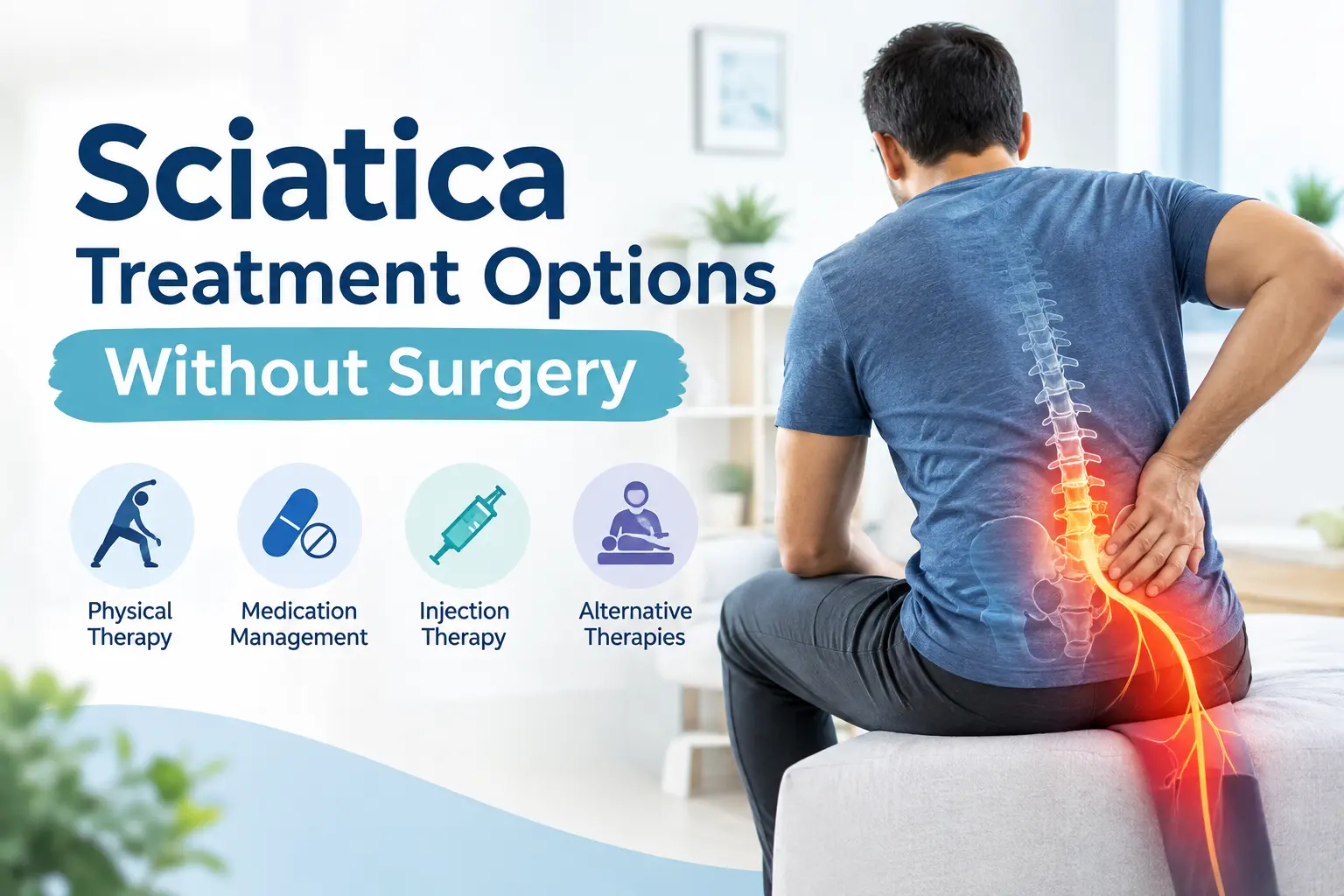
Sciatica can turn simple everyday activities like sitting, walking, or bending into painful challenges. The sharp, shooting pain that travels from your lower back down your leg can be frustrating and exhausting. The good news is that most people with sciatica recover without ever needing surgery.
In this guide, we’ll explain what causes sciatica, explore the most effective non-surgical treatment options, and help you understand when it’s time to see a doctor.
What Is Sciatica?
Sciatica refers to pain that radiates along the path of the sciatic nerve, the longest nerve in the body. It runs from the lower back through the hips and buttocks and down each leg. Sciatica isn’t a condition on its own but a symptom of an underlying problem that irritates or compresses this nerve.
Common Symptoms of Sciatica
Sciatica usually affects only one side of the body. Typical symptoms include sharp, burning, or shooting pain from the lower back or buttock down the leg; numbness or tingling in the leg or foot; muscle weakness in the affected leg; pain that worsens when sitting, coughing, or sneezing; and difficulty standing up or walking for long periods.
What Causes Sciatica?
The most common causes include a herniated or bulging disc pressing on the nerve root, lumbar spinal stenosis (narrowing of the spinal canal, more common with age), degenerative disc disease, spondylolisthesis (when one vertebra slips over another), and piriformis syndrome, where a tight muscle in the buttock irritates the sciatic nerve.
Risk factors include age, excess body weight, prolonged sitting, jobs that involve heavy lifting or twisting, and diabetes, which can increase the risk of nerve damage.
Can Sciatica Heal Without Surgery?
Yes. For most people, sciatica improves within four to six weeks with conservative, non-surgical treatment. Herniated discs often shrink naturally over time, reducing pressure on the nerve. Surgery is typically considered only when symptoms are severe, persistent, or accompanied by serious nerve problems.
Non-Surgical Sciatica Treatment Options
1. Stay Active (But Don’t Overdo It)
In the past, bed rest was commonly recommended for back pain. Today, research shows that staying gently active usually leads to faster recovery. Short walks, light movement, and continuing normal daily activities as much as pain allows can help reduce stiffness and inflammation. Avoid activities that clearly worsen your symptoms, such as heavy lifting or prolonged sitting, but try not to stay in bed for long periods.
2. Hot and Cold Therapy
Applying cold packs during the first few days can help reduce inflammation and numb sharp pain. After that, heat from a heating pad or warm compress can relax tight muscles and improve blood flow. Some people find alternating between heat and cold most helpful. Always place a cloth between your skin and the ice pack or heat source to avoid burns.
3. Over-the-Counter Pain Relief
Non-steroidal anti-inflammatory drugs (NSAIDs) such as ibuprofen may help ease pain and inflammation for some people, while paracetamol (acetaminophen) may help with milder pain. These medications don’t suit everyone, particularly people with stomach ulcers, kidney problems, heart conditions, or those taking blood thinners, so check with a pharmacist or doctor before using them regularly.
4. Physical Therapy
Physical therapy is one of the most effective non-surgical treatments for sciatica. A physiotherapist will assess your posture, movement, and strength, then design a personalised programme that may include:
- Targeted stretches to relieve tension in the lower back, hips, and hamstrings.
- Core strengthening to support the spine and reduce pressure on nerves.
- Directional exercises (such as the McKenzie method) that may help centralise pain away from the leg.
- Nerve gliding exercises to improve the movement of the sciatic nerve.
- Posture and body mechanics training to prevent future flare-ups.
Physical therapy not only eases current symptoms but also helps reduce the risk of sciatica coming back.

5. Stretches and Exercises for Sciatica
Gentle stretching can help relieve pressure on the sciatic nerve. Commonly recommended options include the knee-to-chest stretch, the figure-four (piriformis) stretch, seated spinal twists, gentle hamstring stretches, and the cat-cow stretch.
Move slowly, avoid bouncing, and stop any stretch that increases leg pain, numbness, or tingling. Because the right exercises depend on the underlying cause, it’s best to get guidance from a physiotherapist or doctor before starting a routine.
6. Prescription Medications
If over-the-counter options aren’t enough, a doctor may consider other medications. These can include short courses of oral corticosteroids to reduce inflammation, muscle relaxants for muscle spasms, or certain nerve pain medications. The evidence for some of these medicines in sciatica is mixed, and all carry potential side effects, so they should only be used under medical supervision.
7. Epidural Steroid Injections
For moderate to severe sciatica that doesn’t respond to other treatments, a doctor may recommend an epidural steroid injection. This involves injecting an anti-inflammatory medication into the area around the irritated nerve root, usually with imaging guidance.
Injections may provide short-term pain relief, sometimes lasting weeks to months. This relief can make it easier to participate in physical therapy. However, they don’t fix the underlying cause, and the number of injections is usually limited because of potential side effects.
8. Chiropractic Care and Spinal Manipulation
Some people find relief through chiropractic adjustments or spinal manipulation performed by trained professionals. Research suggests spinal manipulation may provide modest short-term benefits for some types of back-related leg pain. It’s important to choose a qualified, licensed practitioner and to avoid manipulation if you have severe nerve symptoms, osteoporosis, or certain spinal conditions.
9. Massage Therapy
Massage can help relax tight muscles in the lower back, hips, and buttocks, especially when piriformis tension is contributing to symptoms. While it may not treat disc-related causes directly, many people find it helps with pain, relaxation, and overall comfort.
10. Acupuncture
Acupuncture involves inserting thin needles into specific points on the body. Some studies suggest it may help reduce sciatica pain for certain people, although results vary. Always choose a licensed acupuncturist who uses sterile, single-use needles.
11. Yoga and Pilates
Gentle yoga and Pilates can improve flexibility, core strength, and posture, all of which support spinal health. Beginners should choose classes designed for back pain and inform instructors about their condition, as some poses can aggravate symptoms.
12. TENS Therapy
Transcutaneous electrical nerve stimulation (TENS) uses small electrical pulses delivered through pads placed on the skin. Some people find it helps reduce pain temporarily, though scientific evidence for its effectiveness is limited.
Lifestyle Changes That Help Relieve Sciatica
Long-term management often comes down to everyday habits. Helpful changes include maintaining a healthy weight to reduce pressure on the spine, taking regular breaks from sitting every 30 to 45 minutes, using a supportive chair with good lower back support, lifting with your legs rather than your back, sleeping on a supportive mattress (a pillow between or under the knees may help), staying physically active with low-impact exercise such as walking or swimming, and quitting smoking, since smoking can contribute to disc degeneration.
When Is Surgery Considered?
Surgery is usually considered only in specific situations, such as when pain remains severe after several weeks to months of conservative treatment, when there is progressive leg weakness, or when nerve compression causes serious complications. Common procedures include microdiscectomy and laminectomy. Even then, the decision is made carefully between the patient and specialist.
When to See a Doctor
See a doctor if your pain lasts longer than a few weeks, keeps getting worse, or interferes with sleep and daily life. You should also seek medical advice if sciatica follows an injury, such as a fall or car accident.
Seek emergency medical care immediately if you experience:
- Loss of bladder or bowel control.
- Numbness in the groin, inner thighs, or around the buttocks (sometimes called “saddle numbness”).
- Sudden or rapidly worsening weakness in one or both legs.
- Sciatica symptoms in both legs at the same time.
- Severe pain accompanied by fever or unexplained weight loss.
These may be signs of cauda equina syndrome or another serious condition that requires urgent treatment.
Frequently Asked Questions
How long does sciatica take to heal?
Most cases improve within four to six weeks with conservative treatment, although some people experience symptoms for several months.
Is walking good for sciatica?
Yes, gentle walking is often helpful. It keeps the spine moving, reduces stiffness, and supports healing. Start slowly and stop if pain increases significantly.
Should I use heat or ice for sciatica?
Ice is often more helpful in the first few days to reduce inflammation, while heat can relax tight muscles later on. Use whichever provides more relief.
Can sciatica come back after it heals?
Yes, sciatica can recur, especially without lifestyle changes. Regular exercise, good posture, and core strengthening can help reduce the risk.
What is the fastest way to relieve sciatica pain?
A combination of gentle movement, heat or cold therapy, appropriate pain relief, and stretching often provides the quickest relief. Speak with a healthcare provider for treatment tailored to you.
Conclusion
Sciatica can be painful and disruptive, but for most people, it doesn’t require surgery. Non-surgical treatments such as physical therapy, targeted exercises, hot and cold therapy, medications, and injections can effectively relieve pain and help you return to normal activities. Combined with healthy lifestyle habits, these approaches can also reduce the chances of future flare-ups.
If your sciatica pain isn’t improving or is affecting your daily life, consult a doctor or physiotherapist to find the right treatment plan for you.
Disclaimer: This article is for informational purposes only and is not a substitute for professional medical advice, diagnosis, or treatment.