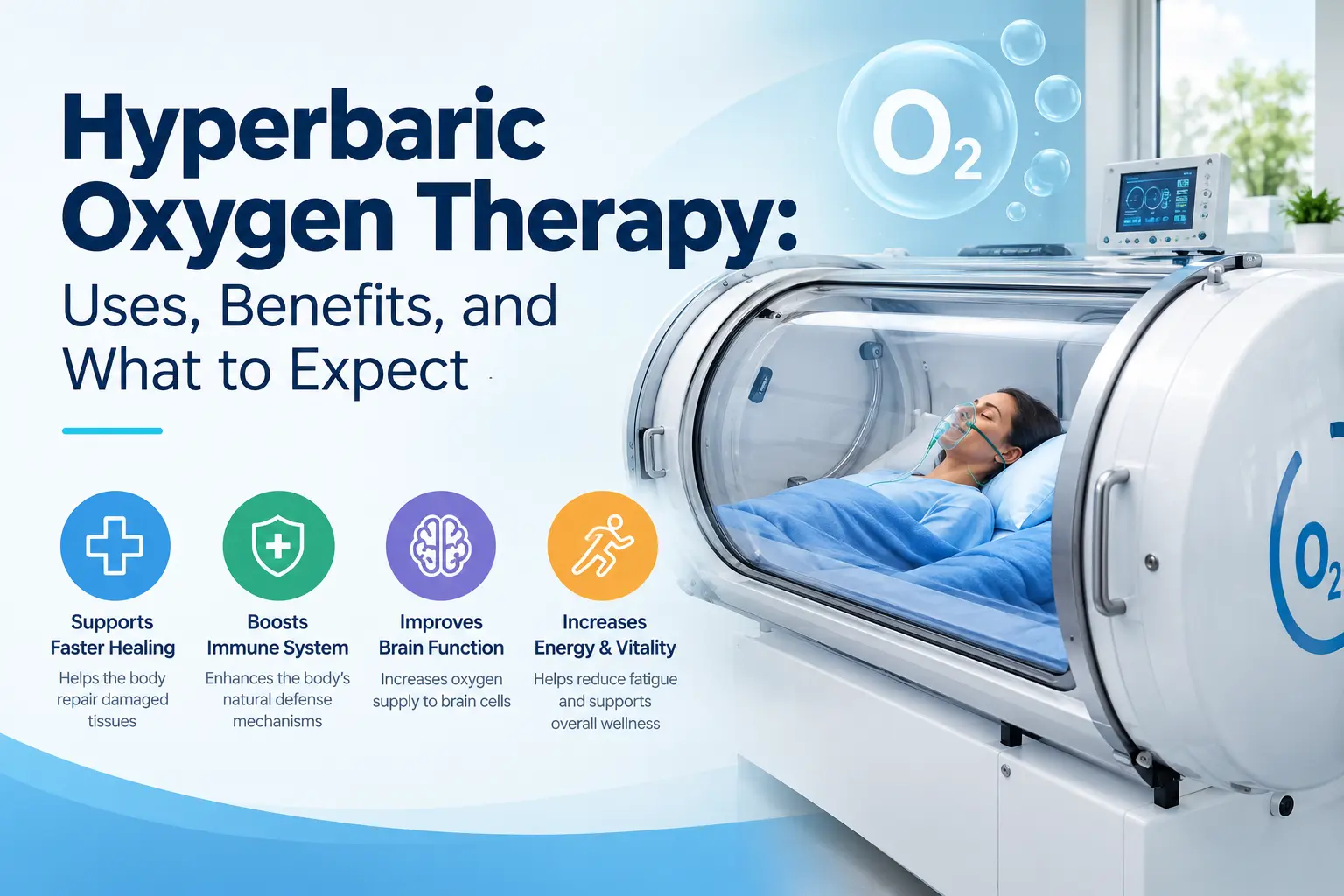
Oxygen is essential for every cell in your body, and when tissue is damaged, it often needs far more oxygen than it can get. That’s the idea behind hyperbaric oxygen therapy (HBOT), a medical treatment that delivers pure oxygen at higher-than-normal air pressure to help the body heal.
Originally developed to treat deep-sea divers with decompression sickness, hyperbaric oxygen therapy is now used in hospitals and specialized clinics around the world for conditions ranging from non-healing diabetic wounds to carbon monoxide poisoning. In this guide, you’ll learn how HBOT works, what it’s used for, its key benefits, possible risks, and what a typical session looks like.
What Is Hyperbaric Oxygen Therapy?
Hyperbaric oxygen therapy is a treatment in which a patient breathes 100% oxygen while inside a pressurized chamber. The air pressure inside the chamber is raised to about two to three times normal atmospheric pressure.
Under normal conditions, oxygen travels through your body attached to red blood cells. Under increased pressure, however, much more oxygen dissolves directly into the blood plasma. This oxygen-rich plasma can reach tissues where blood flow is reduced or blocked, supporting repair and fighting infection.
Types of Hyperbaric Chambers
There are two main types of hyperbaric chambers:
- Monoplace chambers are designed for one person. The patient lies on a padded table that slides into a clear acrylic tube, which is then pressurized with pure oxygen.
- Multiplace chambers are larger rooms that can treat several patients at once. Patients breathe oxygen through a mask or hood while the room is pressurized with air, and a trained attendant is usually present inside.
How Does Hyperbaric Oxygen Therapy Work?
The benefits of hyperbaric oxygen therapy come from a combination of high oxygen levels and increased pressure. Together, they trigger several healing processes in the body:
- Increased oxygen delivery: Oxygen-rich plasma reaches injured or poorly supplied tissues that red blood cells struggle to access.
- New blood vessel growth: Repeated sessions stimulate angiogenesis, the formation of new capillaries, improving long-term circulation to damaged areas.
- Infection control: High oxygen levels help white blood cells kill bacteria more effectively and are directly harmful to certain bacteria that thrive without oxygen.
- Reduced swelling: HBOT causes blood vessels to narrow slightly, which can reduce swelling while still keeping tissues well oxygenated.
- Shrinking gas bubbles: Increased pressure compresses gas bubbles in the bloodstream, which is why HBOT is the standard treatment for decompression sickness and gas embolism.
Medical Uses of Hyperbaric Oxygen Therapy
Hyperbaric oxygen therapy is recognized by major medical bodies, including the Undersea and Hyperbaric Medical Society (UHMS), for a specific list of conditions. In the United States, the FDA has cleared hyperbaric chambers for these established uses.
| Condition | How HBOT Helps |
|---|---|
| Decompression sickness (“the bends”) | Shrinks nitrogen bubbles and restores oxygen to tissues |
| Air or gas embolism | Compresses bubbles blocking blood vessels |
| Carbon monoxide poisoning | Rapidly removes carbon monoxide from the blood |
| Diabetic foot ulcers | Supports wound healing and reduces amputation risk in selected cases |
| Radiation injury | Repairs tissue damaged by cancer radiation therapy |
| Gas gangrene | Fights oxygen-sensitive bacterial infection |
| Necrotizing soft tissue infections | Supports surgery and antibiotics in severe infections |
| Chronic bone infections (refractory osteomyelitis) | Improves infection control in bone |
| Crush injuries and compartment syndrome | Reduces swelling and protects injured tissue |
| Compromised skin grafts and flaps | Improves graft survival |
| Severe thermal burns | Reduces swelling and supports healing |
| Sudden sensorineural hearing loss | Can improve hearing recovery when started early |
| Central retinal artery occlusion | Helps preserve vision in some cases |
| Severe anemia | Provides oxygen when blood transfusion is not possible |
| Intracranial abscess | Supports treatment of brain abscesses |
Off-Label and Emerging Uses
You may see hyperbaric oxygen therapy promoted for conditions such as autism, long COVID, stroke recovery, traumatic brain injury, Alzheimer’s disease, sports recovery, and anti-aging. While research in some of these areas is ongoing, the evidence is still limited or inconclusive. The FDA has issued warnings to consumers about clinics making unproven claims, so it’s wise to discuss any off-label use with a qualified physician before starting treatment.
Read More: PEMF Therapy Demystified: Benefits and Applications Unveiled
Key Benefits of Hyperbaric Oxygen Therapy
When used for approved conditions, HBOT offers several meaningful benefits:
- Faster wound healing: Chronic wounds that haven’t responded to standard care may heal more effectively with added oxygen.
- Lower risk of amputation: For some patients with severe diabetic foot ulcers, HBOT can help save limbs when combined with proper wound care.
- Stronger infection fighting: HBOT enhances the body’s immune response and boosts the effectiveness of certain antibiotics.
- Repair of radiation damage: Cancer survivors with late radiation injuries to the jaw, bladder, or bowel may see significant tissue recovery.
- Life-saving emergency care: For carbon monoxide poisoning and diving injuries, hyperbaric oxygen therapy can be critical and time-sensitive.
- Non-invasive treatment: HBOT doesn’t involve surgery or incisions, and most patients can return to normal activities right after a session.
What to Expect During a Hyperbaric Oxygen Therapy Session
If your doctor recommends HBOT, knowing what happens can make the experience more comfortable.
Before the Session
You’ll typically be asked to change into cotton clothing provided by the clinic. Items such as lighters, electronics, hair products, lotions, and petroleum-based cosmetics are not allowed inside the chamber because of fire safety concerns in an oxygen-rich environment.

During the Session
Once the chamber is sealed, the pressure is increased gradually. You may feel fullness in your ears, similar to what you feel during a flight landing. Swallowing, yawning, or gently clearing your ears usually relieves it. Most patients relax, rest, listen to music, or watch a screen during treatment.
A typical session lasts between 60 and 120 minutes.
After the Session
The chamber is slowly depressurized. Some people feel lightheaded or tired afterward, but this usually passes quickly. Most patients can drive and continue their day as normal.
How Many Sessions Are Needed?
The number of sessions depends on the condition. Emergencies like carbon monoxide poisoning may need only one to three treatments, while chronic wounds or radiation injuries often require 20 to 40 sessions, usually given five days a week.
Possible Side Effects and Risks of HBOT
Hyperbaric oxygen therapy is generally safe when performed by trained professionals, but it does carry some risks:
- Ear barotrauma: Pressure-related ear discomfort or injury is the most common side effect.
- Sinus pain: Pressure changes may cause sinus discomfort, especially if you have a cold or congestion.
- Temporary vision changes: Some patients develop short-term nearsightedness after many sessions, which typically resolves within weeks.
- Claustrophobia: Being in an enclosed chamber can cause anxiety for some people.
- Oxygen toxicity: In rare cases, high oxygen levels can cause seizures or lung problems.
- Fire risk: The oxygen-rich environment requires strict safety protocols.
Who Should Avoid Hyperbaric Oxygen Therapy?
HBOT may not be suitable for people with an untreated collapsed lung (pneumothorax), which is considered an absolute contraindication. Caution is also needed for people with certain lung diseases, recent ear surgery, uncontrolled seizures, high fever, or a cold or sinus infection, and for those taking certain chemotherapy drugs. Always share your full medical history with your doctor before treatment.
Frequently Asked Questions
Is hyperbaric oxygen therapy painful?
No, HBOT is not painful. The most common sensation is ear pressure during pressurization and depressurization, which can usually be relieved by swallowing or yawning.
How long does it take to see results from HBOT?
It depends on the condition. Emergency cases may improve after one session, while chronic wounds often show progress after 10 to 20 sessions.
Can I do hyperbaric oxygen therapy at home?
Some soft-sided “mild” chambers are sold for home use, but they operate at much lower pressures and are not cleared for treating the medical conditions listed above. Medical HBOT should be done in an accredited facility under supervision.
Is hyperbaric oxygen therapy safe?
When performed in an accredited center with trained staff, HBOT is considered safe for most people. Serious complications are rare.
Is HBOT covered by insurance?
Coverage varies by provider and country. Insurers typically cover HBOT only for approved medical conditions, so check with your insurance company before starting treatment.
Conclusion
Hyperbaric oxygen therapy is a proven, non-invasive treatment that harnesses pressurized oxygen to heal wounds, fight infections, repair radiation damage, and treat medical emergencies like carbon monoxide poisoning and decompression sickness. While it’s sometimes marketed for many unproven uses, its real value lies in the well-established conditions backed by medical research.
If you’re living with a non-healing wound or another condition that may benefit from HBOT, talk to your doctor or a hyperbaric medicine specialist to find out whether this therapy is right for you.
Disclaimer: This article is for informational purposes only and is not a substitute for professional medical advice. Always consult a qualified healthcare provider before starting any treatment.