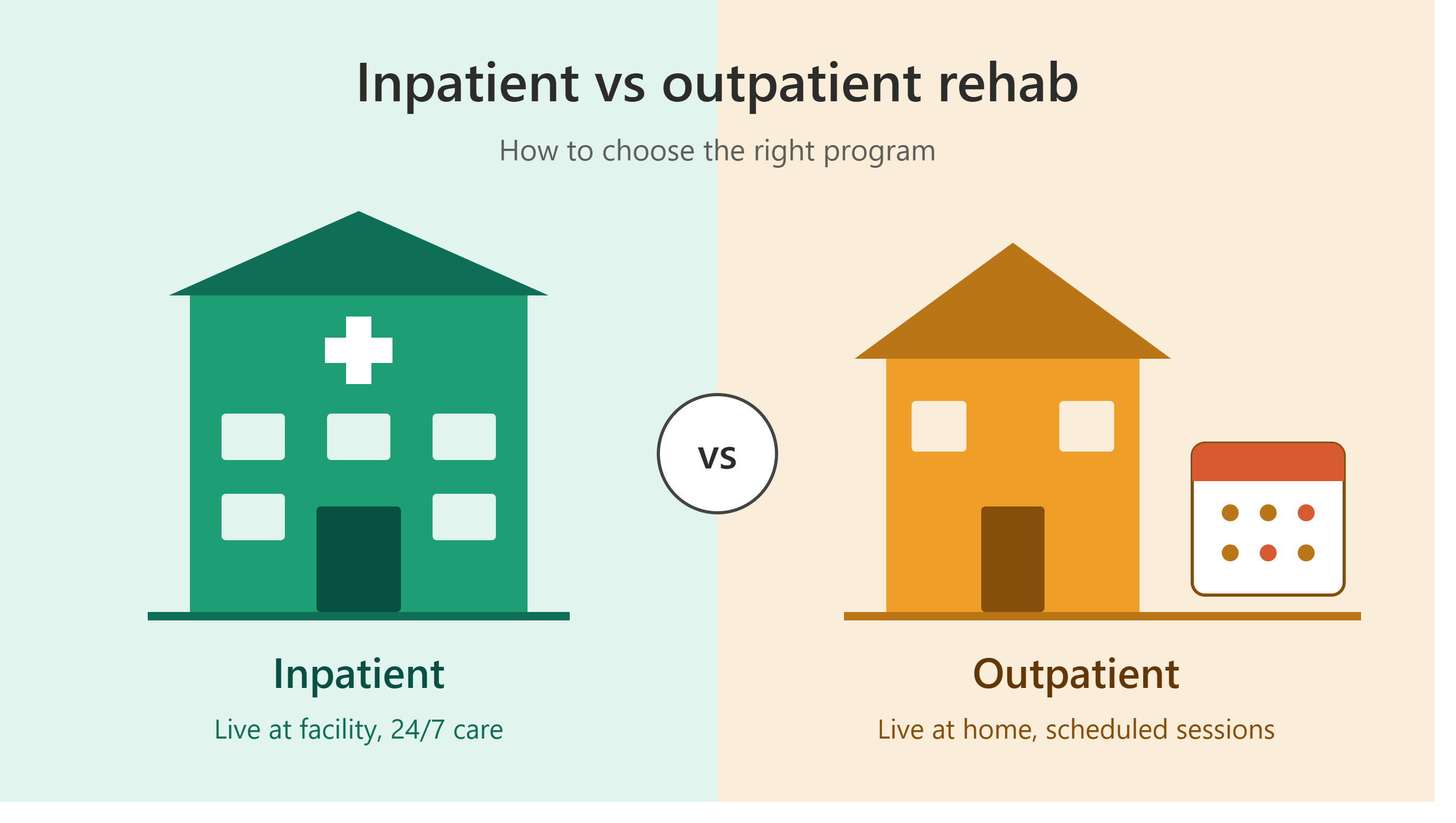
Deciding to get help for addiction takes courage. But once that decision is made, a new question shows up almost immediately: should you choose inpatient or outpatient rehab?
Both paths can lead to lasting recovery. The difference lies in how much structure, support, and time away from daily life each one offers. Choosing the right fit can make the journey smoother and improve your chances of staying sober long-term.
In this guide, we’ll break down how inpatient and outpatient rehab work, the pros and cons of each, and the key questions that can help you or a loved one make a confident decision.
What Is Inpatient Rehab?
Inpatient rehab, also called residential treatment, means living at a treatment facility full-time for the length of your program. Patients receive round-the-clock care in a structured, substance-free environment.
Programs commonly last 30, 60, or 90 days, though some people stay longer depending on their needs and progress.
What a Typical Day Looks Like
Life in inpatient rehab follows a carefully planned routine. A normal day may include:
- Individual therapy with a licensed counselor
- Group therapy sessions with peers in recovery
- Evidence-based treatments such as Cognitive Behavioral Therapy (CBT) and Dialectical Behavior Therapy (DBT)
- Medical check-ins and medication management
- Wellness activities like exercise, yoga, mindfulness, or art therapy
- Family sessions to rebuild relationships and communication
Benefits of Inpatient Rehab
- 24/7 medical and emotional support, which is especially important during early recovery
- Distance from triggers, such as people, places, and stress that fuel substance use
- A structured routine that helps replace unhealthy habits with healthy ones
- Safe, supervised detox for substances that can cause dangerous withdrawal, like alcohol or benzodiazepines
- A built-in community of people facing similar challenges
Drawbacks of Inpatient Rehab
- Requires time away from work, school, and family
- Usually more expensive due to housing, meals, and constant care
- The transition back home can feel challenging without a solid aftercare plan

What Is Outpatient Rehab?
Outpatient rehab allows you to live at home while attending treatment sessions at a clinic or facility on a scheduled basis. You keep up with daily responsibilities while getting professional support.
Types of Outpatient Programs
Outpatient care isn’t one-size-fits-all. It comes in different intensity levels:
1. Standard Outpatient Programs (OP) Sessions a few hours per week. Best for people with mild substance use issues or those stepping down from more intensive care.
2. Intensive Outpatient Programs (IOP) Typically around 9 or more hours of treatment per week, spread across several days. IOPs offer strong support while still allowing you to work or study.
3. Partial Hospitalization Programs (PHP) The most intensive outpatient option, often running most of the day, five days a week. Patients go home in the evenings. PHP is a middle ground between inpatient and standard outpatient care.
Benefits of Outpatient Rehab
- Flexibility to continue working, studying, or caring for family
- Lower cost compared to residential treatment
- Real-world practice, since you apply coping skills in everyday life immediately
- Ongoing support from family and friends at home
Drawbacks of Outpatient Rehab
- Greater exposure to triggers and temptations in your daily environment
- Less supervision, which requires strong personal motivation
- May not be safe for people who need medically supervised detox
Inpatient vs Outpatient Rehab: Side-by-Side Comparison
| Factor | Inpatient Rehab | Outpatient Rehab |
|---|---|---|
| Living arrangement | Live at the facility | Live at home |
| Level of supervision | 24/7 care | Scheduled sessions only |
| Typical duration | 30–90+ days | Several weeks to months |
| Cost | Higher | Lower |
| Daily life | Paused during treatment | Continues alongside treatment |
| Trigger exposure | Minimal | Higher |
| Best for | Moderate to severe addiction, co-occurring disorders | Mild to moderate addiction, strong home support |
| Detox support | Medically supervised on-site | Limited or referred out |
How to Choose the Right Rehab Program: 7 Key Questions
There’s no universal “better” option. The right choice depends on your unique situation. Ask yourself these questions:
1. How severe is the addiction?
Long-term or heavy substance use often calls for the structure of inpatient care. Milder or early-stage issues may respond well to outpatient treatment.
2. Is medical detox needed?
Withdrawal from alcohol, benzodiazepines, and opioids can be uncomfortable and, in some cases, dangerous. If medical supervision is needed, inpatient treatment or a dedicated detox program is usually the safer starting point.
3. Are there co-occurring mental health conditions?
Depression, anxiety, PTSD, and other conditions often go hand in hand with addiction. Inpatient programs that offer dual diagnosis treatment can address both at the same time.
4. What does the home environment look like?
A stable, supportive, substance-free home makes outpatient rehab far more effective. If home life involves conflict, stress, or others who use substances, residential care offers a needed fresh start.
5. Have previous treatment attempts worked?
If outpatient care hasn’t led to lasting change in the past, a more intensive level of support may be the next step.
6. What responsibilities can’t be put on hold?
Jobs, children, and school matter. Outpatient programs, especially IOPs, are designed to fit around these commitments. Many employers also offer leave for medical treatment, so it’s worth checking your options.
7. What does insurance cover?
Under the Affordable Care Act, most health insurance plans in the U.S. must cover substance use disorder treatment as an essential health benefit. Coverage levels vary, so contact your provider or ask the treatment center to verify your benefits.
Pro tip: A professional assessment from a doctor or addiction specialist is the best way to determine the right level of care. Many treatment centers offer free, confidential assessments.
Can You Combine Inpatient and Outpatient Rehab?
Yes, and many people do. Recovery often works best as a continuum of care:
- Medical detox to safely manage withdrawal
- Inpatient rehab to build a strong foundation
- PHP or IOP to transition back into daily life with support
- Standard outpatient therapy for ongoing maintenance
- Aftercare such as sober living homes, support groups, and alumni programs
This step-down approach gives people intensive help when they need it most, then gradually builds independence and confidence.
Signs It’s Time to Seek Treatment
Not sure if rehab is necessary yet? Watch for these warning signs:
- Using more of a substance or for longer than intended
- Failed attempts to cut back or quit
- Neglecting work, school, or family responsibilities
- Continuing to use despite health, legal, or relationship problems
- Experiencing withdrawal symptoms when not using
- Losing interest in activities that once brought joy
If these sound familiar, reaching out for help is a powerful first step.
Also read about path of drug rehab
Frequently Asked Questions
Is inpatient rehab more effective than outpatient rehab?
Not automatically. Inpatient rehab tends to work better for severe addiction or unstable home environments, while outpatient care can be equally effective for people with milder issues and strong support systems. The best program is the one that matches your needs.
How long does outpatient rehab last?
It varies by program and intensity. Many outpatient programs run for several weeks to a few months, and some people continue with lighter outpatient therapy for a year or more.
Can I keep working during rehab?
With outpatient rehab, yes. Most programs offer morning, evening, or weekend sessions. For inpatient rehab, you would typically take leave from work during your stay.
What should I bring to inpatient rehab?
Most facilities provide a packing list. Common items include comfortable clothing, toiletries, any prescribed medications in original packaging, a list of important contacts, and insurance information. Check with your facility, as rules vary.
Does insurance cover inpatient and outpatient rehab?
Many insurance plans cover both, though the amount depends on your plan and the facility. Treatment centers can usually verify your coverage before you begin.
Final Thoughts: The Right Program Is the One You’ll Commit To
Choosing between inpatient and outpatient rehab isn’t about picking the “best” program on paper. It’s about finding the level of care that fits your health needs, your environment, and your life right now.
Inpatient rehab offers a safe, immersive space to heal away from daily pressures. Outpatient rehab provides flexibility and real-world practice while staying connected to home. Both can lead to a healthier, substance-free future.
The most important step is the first one. If you or someone you love is struggling, reach out to a doctor, an addiction specialist, or a trusted treatment center today. In the U.S., you can also call the free, confidential SAMHSA National Helpline at 1-800-662-4357, available 24/7.
Recovery is possible, and the right support can help make it happen.