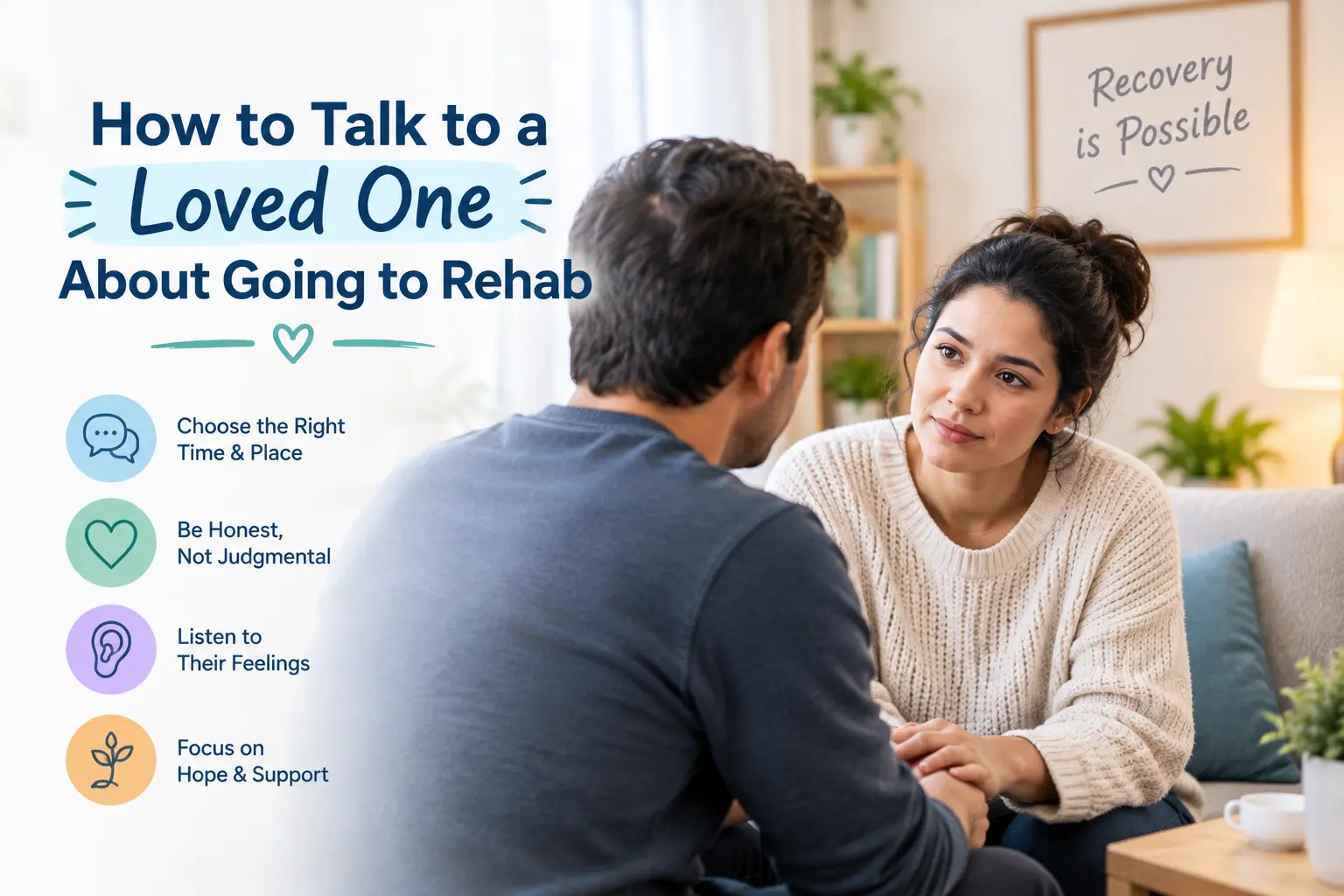
Watching someone you love struggle with drugs or alcohol is painful. You may feel worried, frustrated, scared, or even guilty, and you probably have no idea how to start the conversation. What if they get angry? What if they deny everything? What if you make things worse?
These fears are normal. The good news is that research shows family members can play a powerful role in helping someone accept treatment. Knowing how to talk to a loved one about rehab, with the right timing, words, and mindset, can make the difference between a heated argument and a real turning point.
This guide walks you through how to prepare, what to say, what to avoid, and how to handle resistance.
Why the Way You Approach Rehab Matters
People struggling with addiction often carry deep shame. If a conversation feels like an attack, they’re likely to become defensive, deny the problem, or pull away completely.
Older “tough love” and surprise confrontation methods were once popular, but evidence suggests they often backfire. Today, many addiction specialists recommend compassionate, non-confrontational approaches. One of the best-studied is CRAFT (Community Reinforcement and Family Training), which teaches families positive communication skills. Studies have found that CRAFT helps a majority of families get a resistant loved one to enter treatment.
The takeaway is simple: connection works better than confrontation.
Step 1: Prepare Before You Talk
A conversation about rehab shouldn’t happen on impulse. A little preparation goes a long way.
Learn About Addiction
Addiction is a recognized medical condition that changes brain chemistry, not a lack of willpower or a moral failing. Understanding this can help you speak with empathy instead of blame.
Research Treatment Options
Before the conversation, find out what kind of help is available so you can offer real next steps. Treatment options may include:
- Medical detox: Supervised withdrawal, which is essential for alcohol, benzodiazepines, and opioids, as withdrawal from some substances can be dangerous.
- Inpatient (residential) rehab: Live-in treatment, typically lasting 28 to 90 days.
- Outpatient programs: Treatment while living at home, suitable for milder cases or after inpatient care.
- Medication-assisted treatment: Medications combined with counseling, especially for opioid or alcohol use disorders.
- Therapy and support groups: Counseling, cognitive behavioral therapy, and peer groups such as 12-step programs.
Having two or three options ready, along with contact details and costs, shows your loved one that help is concrete and achievable.
Check Your Own Emotions
If you’re feeling very angry or hurt, it can come out during the talk. Consider speaking with a counselor or joining a family support group first, so you can approach the conversation calmly.
Step 2: Choose the Right Time and Place
Timing can make or break this conversation.
- Talk when they’re sober. Never try to have this discussion while your loved one is intoxicated, high, or hungover. They won’t be able to engage clearly.
- Pick a private, calm setting. Choose somewhere comfortable and free from distractions, where they won’t feel embarrassed in front of others.
- Avoid moments of conflict. Don’t bring it up in the middle of an argument or right after a crisis when emotions are running high.
- Allow enough time. Make sure neither of you needs to rush off somewhere.
Sometimes a natural opening appears, such as when your loved one expresses regret about something that happened while using. These moments can be a good time to gently raise the topic.
Step 3: What to Say When Talking About Rehab
How you phrase things matters as much as what you say.
Use “I” Statements
“I” statements express your feelings without sounding accusatory. Compare these:
| Instead of This | Try This |
|---|---|
| “You’re ruining your life.” | “I’m really worried about you, and I love you.” |
| “You’re an addict and you need help.” | “I’ve noticed you’ve been struggling, and I want to help.” |
| “You always ruin family events.” | “I felt sad when you couldn’t join us on Sunday.” |
| “You need to go to rehab now.” | “Would you be open to looking at some options together?” |
Be Specific and Factual
Mention specific behaviors you’ve observed rather than labels. For example: “Last week you missed work twice, and I found you asleep on the couch in the afternoon. I’m concerned.” Facts are harder to dismiss than general criticism.
Express Love and Support
Make it clear that you’re having this conversation because you care. Remind them of their strengths and the things you love about them. Let them know they don’t have to face this alone.
Ask Open-Ended Questions
Instead of lecturing, invite them to share. Questions like “How have you been feeling lately?” or “What do you think would help?” give your loved one a sense of control and encourage honest dialogue.
Listen More Than You Talk
Let your loved one express their fears, frustrations, or doubts without interrupting. Feeling heard can lower defensiveness and open the door to real change.
Step 4: What to Avoid Saying or Doing
Even with good intentions, certain approaches can push your loved one away:
- Labeling or name-calling: Words like “addict,” “junkie,” or “alcoholic” can trigger shame and defensiveness.
- Lecturing or moralizing: Long speeches about right and wrong usually shut down the conversation.
- Making threats you won’t keep: Ultimatums only work if you’re truly prepared to follow through.
- Bringing up every past mistake: Focus on the present and the future, not a long list of past failures.
- Expecting immediate agreement: Very few people say yes to rehab after one conversation.
- Arguing about denial: If they deny the problem, don’t force an argument. Calmly restate your concern and leave the door open.

Step 5: How to Handle Resistance
It’s common for a loved one to refuse treatment at first. Resistance doesn’t mean failure; it often means they’re not ready yet.
Respond to Common Objections
- “I don’t have a problem.” Gently share what you’ve observed and why it worries you, without arguing.
- “I can quit on my own.” Acknowledge their desire to change, and suggest that professional support can make quitting safer and more likely to last.
- “I can’t afford it.” Share the options you’ve researched, including insurance coverage, government programs, or low-cost services.
- “I can’t take time off work or leave my family.” Mention outpatient programs or explain that many workplaces offer leave for medical treatment.
Set Healthy Boundaries
Boundaries protect you and stop you from accidentally enabling the addiction. Examples include not giving money that could be used for substances, not covering up for missed work, and not allowing substance use in your home. Be clear, calm, and consistent.
Keep the Door Open
If the first conversation doesn’t lead to treatment, let your loved one know you’ll be there whenever they’re ready. Many people accept help weeks or months after the first conversation.
Consider Professional Help
If repeated conversations don’t work, a licensed addiction counselor or professional interventionist can guide the process. Family therapy can also help everyone communicate better.
Know When It’s an Emergency
Some situations can’t wait. Call your local emergency number right away if your loved one shows signs of an overdose (such as unresponsiveness, slow or stopped breathing, or blue lips), talks about suicide or harming themselves, or becomes a danger to others.
Don’t Forget to Take Care of Yourself
Supporting someone with addiction is emotionally exhausting. Your well-being matters too. Consider joining a family support group, speaking with a therapist, and making time for rest and the people who support you. You can’t control your loved one’s choices, but you can take care of yourself.
Read More: Inpatient vs Outpatient Rehab: How to Choose the Right Program
Frequently Asked Questions
Can I force someone to go to rehab?
In most cases, adults can’t be forced into rehab. Some regions have laws allowing involuntary treatment in specific circumstances, so check local regulations. Voluntary treatment is usually more effective.
What if my loved one gets angry when I bring up rehab?
Stay calm, don’t argue, and give them space. You can say you’ll talk later and try again when things are calmer.
Do interventions work?
Surprise, confrontational interventions have mixed results. Compassionate, planned approaches like CRAFT have stronger evidence for helping loved ones enter treatment.
How do I know if my loved one needs rehab?
Warning signs include failed attempts to quit, neglecting work or family, withdrawal symptoms, risky behavior, and continued use despite clear harm.
What should I do if they relapse after rehab?
Relapse is common and doesn’t mean treatment failed. Encourage them to reconnect with their treatment provider and continue support.
Conclusion
Learning how to talk to a loved one about going to rehab takes patience, preparation, and compassion. Choose a calm moment, speak from love using “I” statements, offer concrete treatment options, and listen without judgment. If they resist, set healthy boundaries and keep the door open.
Recovery is possible, and your support can be one of the most powerful reasons your loved one decides to take that first step. If you’re unsure where to begin, consider reaching out to an addiction specialist or treatment center for guidance today.
Disclaimer: This article is for informational purposes only and is not a substitute for professional medical or mental health advice. In an emergency, contact your local emergency services immediately.