Lymphatic drainage massage has gone from a specialized medical therapy to a wellness trend, with spas, social media, and influencers praising it for everything from a “debloated” face to detoxing the body. But what does it actually do, and who really benefits from it?
This guide explains how lymphatic drainage massage works, which benefits are backed by evidence, who is most likely to benefit, who should avoid it, and what to expect from a session.
What Is the Lymphatic System?
To understand lymphatic drainage massage, it helps to know a little about the lymphatic system.
The lymphatic system is a network of vessels, nodes, and organs that runs throughout the body. It collects excess fluid, called lymph, from tissues and returns it to the bloodstream. Along the way, lymph passes through lymph nodes, which filter out waste, bacteria, and other unwanted material. The system also plays a major role in immune function.
Unlike blood, which is pumped by the heart, lymph has no central pump. It moves mainly through muscle movement, breathing, and the gentle contractions of lymph vessels. When the system is damaged or overwhelmed, fluid can build up in tissues and cause swelling, a condition known as lymphedema.
What Is Lymphatic Drainage Massage?
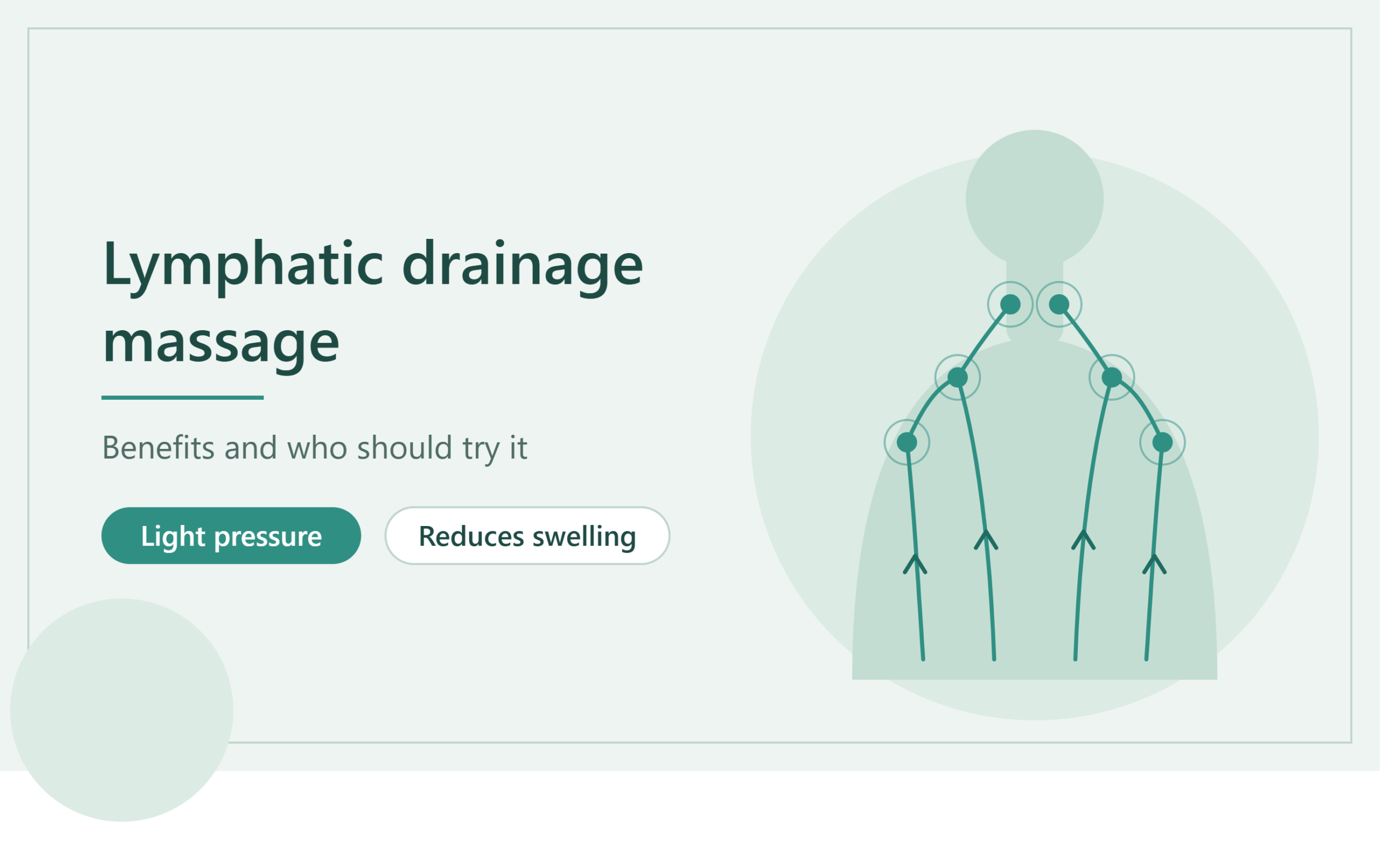
Lymphatic drainage massage, often called manual lymphatic drainage (MLD), is a gentle, rhythmic massage technique designed to encourage the movement of lymph toward working lymph nodes, where it can be processed and drained.
It is very different from a typical deep tissue or sports massage:
- The pressure is very light. Lymph vessels sit just beneath the skin, so the technique uses soft, skin-stretching movements rather than deep kneading.
- The movements are slow and repetitive. Therapists use specific, rhythmic strokes in a set direction.
- The sequence matters. Treatment usually begins by clearing areas near lymph nodes, such as the neck, before working on swollen areas, so fluid has somewhere to go.
Well-known clinical methods include the Vodder, Földi, Leduc, and Casley-Smith techniques. In medical settings, MLD is often one part of complete decongestive therapy (CDT), which also includes compression bandaging or garments, exercise, and skin care.

Benefits of Lymphatic Drainage Massage
It’s important to separate benefits supported by research from claims that are mostly marketing. Here’s an honest look.
1. Helps Manage Lymphedema
This is the best-established use of lymphatic drainage massage. Lymphedema can occur after lymph nodes are removed or damaged, most commonly following cancer treatment such as breast cancer surgery or radiation. It can also be present from birth.
As part of complete decongestive therapy, MLD can help reduce swelling, improve comfort, and support limb function. It’s generally most effective when combined with compression and exercise rather than used alone.
2. Reduces Swelling After Surgery
Many surgeons recommend lymphatic drainage after certain procedures, particularly cosmetic surgeries like liposuction, tummy tucks, and facelifts, and some orthopedic surgeries. It may help reduce post-operative swelling, ease discomfort, and support recovery. Timing matters, so it should only be started when your surgeon approves.
3. Relieves Discomfort From Lipedema
Lipedema is a chronic condition, mostly affecting women, in which fat builds up abnormally in the legs and sometimes arms, often with pain and easy bruising. Lymphatic drainage doesn’t remove lipedema fat, but some people find it helps reduce pain, heaviness, and associated swelling.
4. May Ease Mild Fluid Retention
Some people use lymphatic drainage for mild swelling caused by long flights, prolonged standing, or hormonal changes. Many report that their legs or face feel lighter afterward. This effect is usually temporary, and persistent or unexplained swelling should always be checked by a doctor.
5. Promotes Relaxation
The slow, gentle rhythm of lymphatic drainage massage is very calming. Many people find it reduces stress and helps them relax, similar to other forms of gentle bodywork.
6. May Help With Certain Chronic Conditions
Some studies have explored lymphatic drainage for conditions like fibromyalgia and chronic venous insufficiency, with some people reporting less pain and stiffness. The research here is still limited, so it’s best seen as a possible complementary therapy rather than a treatment.
Claims to Be Cautious About
You’ll often see lymphatic drainage marketed for benefits that aren’t well supported by evidence:
- “Detoxing” the body: Your liver, kidneys, and lymphatic system already remove waste. There’s no good evidence that massage provides additional detox benefits for healthy people.
- Weight loss: Any change on the scale is likely temporary fluid shift, not fat loss.
- Cellulite removal: Effects on cellulite appear minimal and short-lived at best.
- Boosting immunity: There’s no solid evidence that lymphatic massage strengthens the immune system in healthy people.
Enjoying lymphatic drainage for relaxation or a temporary “lighter” feeling is perfectly fine. Just keep expectations realistic.
Who Should Try Lymphatic Drainage Massage?
You may benefit from lymphatic drainage massage if you:
- Have lymphedema, especially after cancer treatment involving lymph node removal or radiation
- Are recovering from surgery, particularly cosmetic or orthopedic procedures, and your surgeon recommends it
- Have lipedema and want help managing pain and heaviness
- Experience mild, occasional swelling from travel, standing, or hormonal changes, after ruling out underlying medical causes
- Live with chronic conditions like fibromyalgia and want a gentle complementary therapy, with your doctor’s input
- Want a gentle, relaxing form of massage without deep pressure
Who Should Avoid Lymphatic Drainage Massage?
Lymphatic drainage moves fluid through the body, which can be risky for people with certain conditions. Avoid it, or get clearance from your doctor first, if you have:
- Deep vein thrombosis (DVT) or a history of blood clots: Massage could potentially dislodge a clot.
- Congestive heart failure: Moving extra fluid back into circulation can strain the heart.
- Kidney failure or serious kidney problems: The kidneys may not be able to handle the increased fluid load.
- Active infections, including cellulitis: Massage could spread the infection.
- Fever or acute inflammation
- Active cancer or cancer under treatment: Speak with your oncologist before starting.
- Serious liver disease
- Pregnancy complications: Ask your obstetrician first, especially in the first trimester or with a high-risk pregnancy.
- Thyroid conditions: Neck work may need to be avoided or modified.
If you have sudden, painful, or one-sided swelling, especially in a leg, seek medical attention promptly rather than booking a massage, as it can be a sign of a blood clot.
What to Expect During a Session
A typical lymphatic drainage session lasts around 45 to 60 minutes, though medical treatment for lymphedema may follow a more intensive schedule.
- Consultation: The therapist asks about your health history, current conditions, and goals.
- Positioning: You’ll usually lie comfortably on a massage table.
- Clearing the nodes: The therapist often starts near the neck, collarbone, or other lymph node regions.
- Gentle strokes: Light, slow, rhythmic movements guide fluid toward the nodes. It may feel almost too gentle at first, which is normal.
- Aftercare: You may be advised to drink water, move gently, or wear compression garments if prescribed.
Some people notice they need to urinate more often after a session, and many feel relaxed or slightly tired.
Can You Do Lymphatic Drainage at Home?
Yes, simple self-lymphatic drainage can be learned, and it’s commonly taught to people managing lymphedema so they can continue care between appointments. However, it’s best to learn proper technique from a certified therapist first, especially if you have a medical condition, since the direction and sequence of strokes matter.
Everyday habits also support healthy lymph flow, including regular movement, deep breathing, staying hydrated, and elevating swollen limbs when resting.
How to Find a Qualified Therapist
For medical needs like lymphedema or post-surgical recovery, look for a certified lymphedema therapist (CLT) or a physiotherapist, occupational therapist, or massage therapist with specific MLD training. Ask about their certification, training method, and experience with your condition. For general wellness, choose a licensed massage therapist with formal lymphatic drainage training rather than relying on spa marketing alone.
Read More: 5 REASONS WHY YOU SHOULD HAVE A TANTRIC MASSAGE
Frequently Asked Questions
Does lymphatic drainage massage hurt?
No. It uses very light pressure and should feel gentle and relaxing. If it hurts, the pressure is likely too strong for this technique.
How often should you get lymphatic drainage massage?
It depends on your reason for getting it. People with lymphedema or post-surgical swelling may need frequent sessions as advised by their care team, while those using it for relaxation might go occasionally. Your therapist or doctor can recommend a suitable schedule.
How soon will I see results?
Some people notice reduced puffiness or a lighter feeling soon after a session. For lymphedema, results build gradually as part of an ongoing treatment plan.
Does lymphatic drainage help with weight loss?
No. Any change in weight is due to temporary fluid shifts, not fat loss.
Can lymphatic drainage massage reduce facial puffiness?
It may temporarily reduce mild facial puffiness, which is why facial lymphatic drainage is popular in skincare routines. The effect is usually short-lived.
Is lymphatic drainage safe after surgery?
It’s often recommended after certain surgeries, but only begin when your surgeon approves, and choose a therapist experienced in post-operative care.
Conclusion
Lymphatic drainage massage is a gentle, specialized technique with real, evidence-supported benefits for people with lymphedema, post-surgical swelling, and lipedema-related discomfort. It can also be a calming option for anyone who enjoys light, relaxing bodywork.
At the same time, many popular claims about detoxing, weight loss, and cellulite aren’t well supported by research. And because it moves fluid through the body, it isn’t safe for everyone, particularly people with blood clots, heart failure, kidney disease, or active infections.
If you’re considering lymphatic drainage massage for a medical reason, talk to your doctor first and look for a certified, experienced therapist. With realistic expectations and the right guidance, it can be a helpful part of your care.
Disclaimer: This article is for informational purposes only and is not a substitute for professional medical advice. Consult a qualified healthcare provider before starting any new therapy, especially if you have an existing health condition.