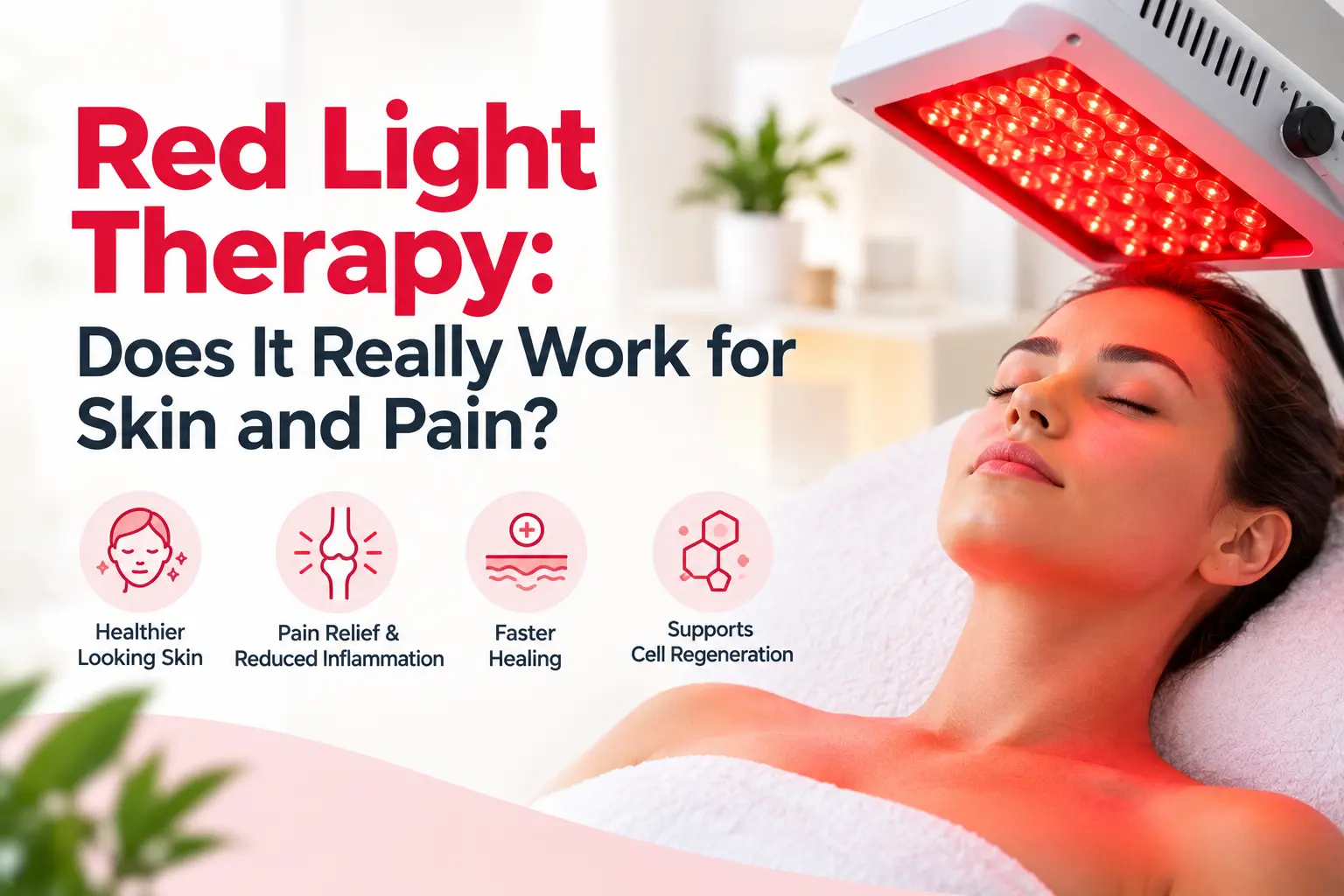
From celebrity skincare routines to physiotherapy clinics, red light therapy is everywhere. Glowing face masks, handheld wands, and full-body panels promise smoother skin, fewer wrinkles, and relief from aches and pains. But with so much hype, it’s fair to ask: does red light therapy actually work, or is it just another wellness trend?
In this guide, we’ll break down what red light therapy is, how it works, what the research says about its benefits for skin and pain, and what you should know before trying it.
What Is Red Light Therapy?
Red light therapy (RLT) is a treatment that exposes the skin to low levels of red or near-infrared light. In scientific circles, it’s often called photobiomodulation (PBM) or low-level light therapy (LLLT).
Unlike UV light from the sun or tanning beds, red light doesn’t burn or damage the skin. It uses specific wavelengths that are absorbed by your cells and are thought to trigger beneficial biological changes.
Red Light vs. Near-Infrared Light
Red light therapy devices typically use one or both of these types of light:
| Type | Typical Wavelength | Penetration | Commonly Used For |
|---|---|---|---|
| Red light | Around 630–660 nm | Shallow, affects skin layers | Wrinkles, skin tone, acne, healing |
| Near-infrared (NIR) light | Around 810–850 nm | Deeper, reaches muscles and joints | Pain, inflammation, muscle recovery |
Red light is visible and glows red, while near-infrared light is invisible to the eye. Many devices combine both to target surface and deeper tissues.
How Does Red Light Therapy Work?
The leading theory centres on the mitochondria, the energy-producing parts of your cells. When red and near-infrared light are absorbed by mitochondria, they appear to boost the production of ATP, the molecule cells use for energy.
With more energy available, cells may be able to repair themselves more efficiently, produce more collagen, and reduce inflammation. Researchers believe this cellular “boost” is behind many of the reported red light therapy benefits, though scientists are still working to fully understand the mechanism.
Red Light Therapy for Skin: What the Evidence Says
Skin is where red light therapy has gained the most attention, and where some of the more encouraging research exists.
Wrinkles and Fine Lines
Several clinical studies have found that regular red light therapy may improve the appearance of fine lines and wrinkles. The likely reason is increased collagen production, the protein that keeps skin firm and plump. Results tend to be gradual and modest rather than dramatic, and they usually require consistent treatment over several weeks.
Skin Texture and Tone
Some users and studies report smoother texture, improved skin tone, and a healthier glow. Red light may help by improving circulation and supporting skin repair.
Acne
Red light therapy may help reduce acne-related inflammation and redness. It’s often combined with blue light therapy, which targets acne-causing bacteria. The combination tends to show better results than red light alone for many people with mild to moderate acne.
Wound Healing and Scars
Red light has been studied for its potential to speed up wound healing and improve the appearance of some scars. Evidence is promising but still developing.
Hair Loss
Although not strictly a skin concern, scalp health is closely related. Some low-level laser devices have been cleared by the US FDA for treating certain types of hereditary hair loss, and studies suggest they may help increase hair density for some people.
Skin Conditions Where Evidence Is Limited
Red light therapy is sometimes promoted for psoriasis, rosacea, eczema, and cellulite. Research in these areas is limited or mixed, so it’s best to speak with a dermatologist before using it for these conditions.

Red Light Therapy for Pain: What the Evidence Says
Near-infrared light, which penetrates deeper, is the focus of most pain research.
Joint Pain and Arthritis
Some studies suggest red light therapy may help reduce pain and stiffness in conditions like knee osteoarthritis, particularly in the short term. Results vary between studies, partly because treatments differ widely in wavelength, dose, and duration.
Muscle Pain and Recovery
Athletes and fitness enthusiasts increasingly use red light therapy to reduce muscle soreness and support recovery after exercise. Early research is encouraging, though more large, high-quality studies are needed.
Neck and Back Pain
There’s some evidence that photobiomodulation may offer short-term relief for chronic neck pain and certain types of back pain. It’s generally considered a complementary therapy rather than a standalone solution.
Tendon Injuries and Inflammation
Red light therapy has been studied for conditions like tendinopathy and inflammation-related pain. Some trials show benefit, while others show little difference compared to placebo.
Oral Mucositis
One of the strongest areas of evidence for photobiomodulation is in preventing and reducing painful mouth sores (oral mucositis) in people undergoing certain cancer treatments. This is usually delivered in medical settings under professional supervision.
So, Does Red Light Therapy Really Work?
The honest answer is: it can, but with realistic expectations.
Here’s a balanced summary:
- Most promising: Mild improvement in wrinkles and skin texture, certain types of hair loss, and oral mucositis in medical settings.
- Moderately promising: Acne (especially combined with blue light), joint pain, and muscle recovery.
- Limited or mixed evidence: Cellulite, weight loss, and many conditions marketed online.
Results depend heavily on the device, wavelength, dose, and consistency of use. Professional treatments in clinics often use more powerful devices than at-home gadgets, which may explain why some people see faster results in a clinical setting.
Is Red Light Therapy Safe?
Red light therapy is generally considered safe when used correctly. It’s non-invasive, doesn’t use UV radiation, and side effects are uncommon. Still, keep these precautions in mind:
- Protect your eyes. Bright light can strain or damage the eyes. Use protective goggles if recommended by the manufacturer.
- Follow the instructions. Overuse doesn’t speed up results and may cause irritation, redness, or, rarely, burns.
- Check your medications. Some medicines and skincare products increase light sensitivity. Ask your doctor or pharmacist if you’re unsure.
- Consult a doctor first if you are pregnant, have a history of skin cancer, have an eye condition, or have any serious medical condition.
- Don’t use it to self-treat unexplained pain, suspicious moles, or worsening skin problems. Get a proper diagnosis first.
At-Home Devices vs. Professional Treatments
| Factor | At-Home Devices | Professional Treatments |
|---|---|---|
| Cost | One-time purchase | Pay per session |
| Power | Usually lower | Usually higher |
| Convenience | Use anytime | Requires appointments |
| Guidance | Self-directed | Supervised by trained staff |
| Speed of results | Slower, needs consistency | Often faster |
If you’re buying an at-home device, look for one that clearly lists its wavelengths, has safety certifications, and comes from a reputable brand. Be cautious of products making exaggerated claims.
Tips for Getting the Best Results
- Be consistent. Most studies involve several sessions a week over a period of weeks to months.
- Start slowly. Follow the recommended session length and build up gradually.
- Cleanse your skin first. Remove makeup and sunscreen so light can reach the skin properly.
- Track your progress. Take photos or keep notes to see real changes over time.
- Combine with good habits. Sun protection, a solid skincare routine, exercise, and sleep all support better results.
- Keep expectations realistic. Red light therapy is a supportive tool, not a miracle cure.
Read More: Hyperbaric Oxygen Therapy: Uses, Benefits, and What to Expect
Frequently Asked Questions
How long does it take for red light therapy to work?
Most people need consistent sessions over several weeks before noticing changes. Skin improvements often take 8 to 12 weeks, while some people report pain relief sooner.
How often should you use red light therapy?
Many protocols suggest 3 to 5 sessions per week, each lasting a few minutes. Always follow your device’s instructions or your practitioner’s advice.
Can red light therapy damage your skin?
When used correctly, red light therapy is unlikely to damage skin because it doesn’t use UV light. Overuse or poor-quality devices may cause redness, irritation, or rarely burns.
Is red light therapy good for knee pain?
Some studies suggest red and near-infrared light may reduce knee pain and stiffness, particularly from osteoarthritis. It works best as part of a wider treatment plan that includes exercise and medical advice.
Do at-home red light therapy devices work?
Quality at-home devices can provide benefits, but they’re usually less powerful than clinical equipment, so results may take longer. Choose devices with clearly stated wavelengths and safety certifications.
Conclusion
Red light therapy isn’t magic, but it isn’t just hype either. Research suggests it can offer real, if modest, benefits for skin ageing, acne, hair loss, and some types of pain, especially when used consistently and correctly. At the same time, many claims made online go far beyond what science currently supports.
If you’re curious about trying red light therapy for skin or pain, start by talking to a dermatologist, physiotherapist, or doctor. They can help you decide whether it suits your needs and guide you toward safe, effective treatment.