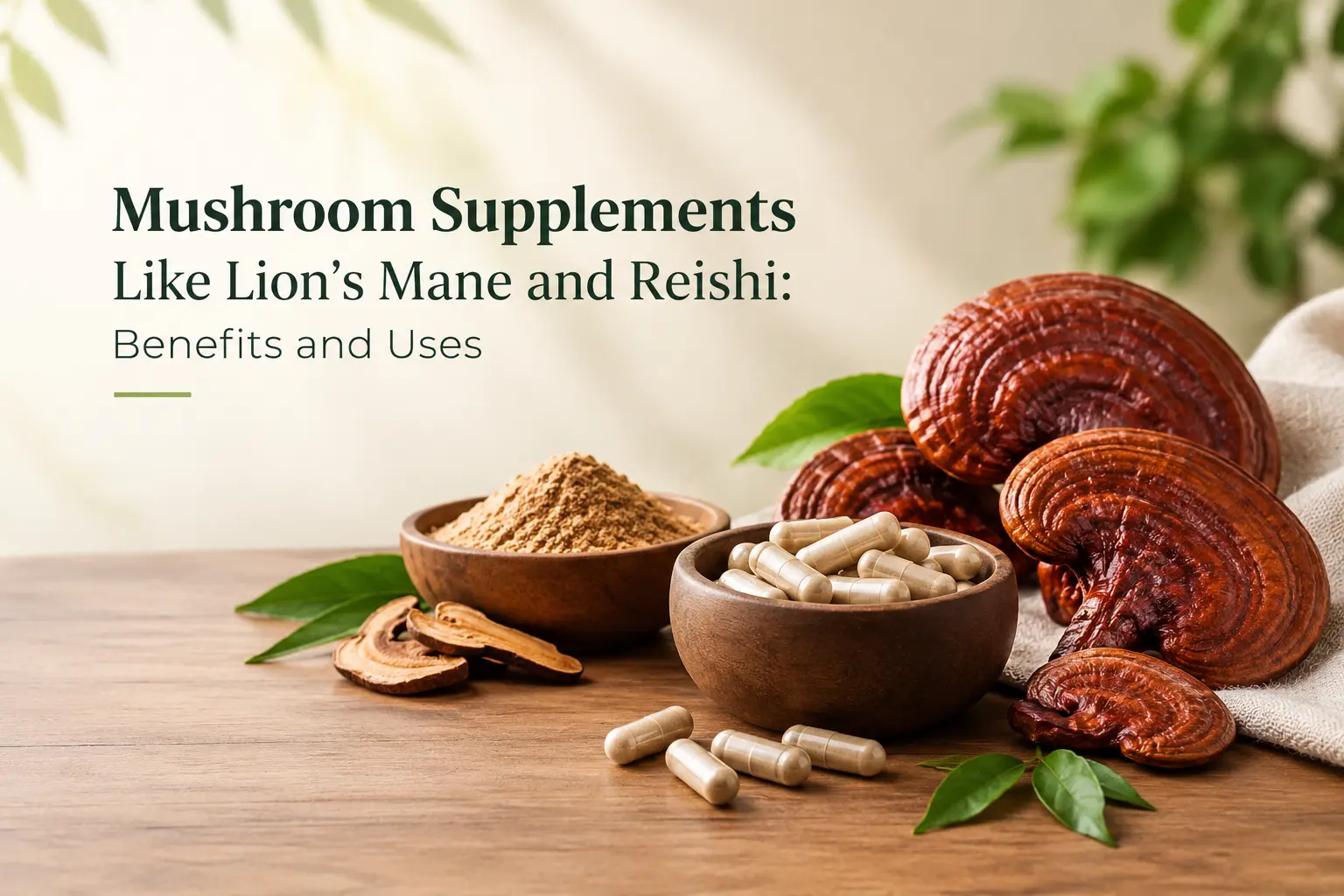
Mushroom supplements have moved from traditional medicine cabinets into mainstream wellness routines. You’ll now find Lion’s Mane in coffee blends, Reishi in sleep teas, and mushroom capsules lining pharmacy shelves. But what exactly are these supplements, what can they actually do, and are they worth adding to your routine?
In this guide, we’ll explore the benefits and uses of popular mushroom supplements, focusing on Lion’s Mane and Reishi, along with what current research says and how to choose and use them safely.
What Are Mushroom Supplements?
Mushroom supplements are products made from medicinal or functional mushrooms, the kinds valued for their health-supporting compounds rather than their flavour. They usually come as powders, capsules, tinctures, gummies, or extracts mixed into drinks.
These mushrooms contain bioactive compounds such as beta-glucans (a type of fibre linked to immune activity), triterpenes, polysaccharides, and antioxidants. Many have been used for centuries in Traditional Chinese Medicine and other healing traditions across Asia.
It’s worth noting that most functional mushrooms are not psychedelic. Lion’s Mane, Reishi, Cordyceps, and others do not contain psilocybin and won’t produce mind-altering effects.
Lion’s Mane Mushroom: The “Brain Mushroom”
Lion’s Mane (Hericium erinaceus) is a shaggy white mushroom that looks like a cascading pom-pom or a lion’s mane, which is how it got its name. It’s also eaten as a culinary mushroom, with a mild, seafood-like taste.
Benefits of Lion’s Mane
Supports brain health and memory
Lion’s Mane is best known for its potential effects on the brain. It contains compounds called hericenones and erinacines, which laboratory and animal studies suggest may stimulate nerve growth factor (NGF), a protein involved in the growth and maintenance of nerve cells. A small Japanese study in older adults with mild cognitive impairment found improvements in cognitive scores while participants took Lion’s Mane, though the benefits faded after they stopped.
May help with mood and stress
Some small human studies have reported reduced feelings of anxiety and irritability in people taking Lion’s Mane. Researchers believe this may relate to its anti-inflammatory effects and possible influence on brain function, but larger studies are needed.
Supports nerve health
Animal research suggests Lion’s Mane may help support nerve repair after injury. This is an exciting area of study, though human evidence is still very limited.
Digestive health
Lion’s Mane has traditionally been used to support stomach health. Some early research suggests it may help protect the stomach lining and support healthy gut bacteria.
Common Uses of Lion’s Mane
People commonly take Lion’s Mane to support focus and mental clarity during work or study, as part of a healthy ageing routine, in morning coffee or “mushroom coffee” blends as a focus booster, and as a general wellness supplement for brain and nerve support.
Reishi Mushroom: The “Mushroom of Immortality”
Reishi (Ganoderma lucidum), known as Lingzhi in China, is a glossy, reddish-brown mushroom with a woody texture. It’s too tough and bitter to eat as food, so it’s traditionally prepared as a tea, tincture, or extract. It has been revered in Eastern medicine for over 2,000 years and is often called the “mushroom of immortality.”
Benefits of Reishi
Supports immune function
Reishi is rich in beta-glucans and triterpenes, compounds studied for their effects on immune cells. Some research suggests Reishi may influence white blood cell activity, although results in healthy people have been mixed.
May promote relaxation and better sleep
Reishi is widely considered a calming mushroom. Traditional use and some animal studies suggest it may support relaxation and sleep quality, which is why it often appears in evening teas and sleep blends.
May help reduce fatigue and stress
Reishi is often grouped with adaptogens, substances believed to help the body manage stress. A few small studies have reported reduced fatigue and improved wellbeing, but the evidence is still early.
Antioxidant properties
Reishi contains antioxidants that help protect cells from oxidative damage, a process linked to ageing and chronic disease.
Heart and blood sugar health
Some studies have explored Reishi’s effects on cholesterol, blood pressure, and blood sugar. So far, results are inconsistent, and more research is needed before drawing conclusions.
A note on cancer claims: Reishi is sometimes marketed as a cancer remedy. While it has been studied as a complementary therapy alongside conventional treatment, there isn’t enough evidence to support using it as a cancer treatment. Anyone undergoing cancer care should speak with their oncologist before taking it.
Common Uses of Reishi
People typically use Reishi Mushroom as an evening tea or supplement to wind down, as part of an immune support routine during seasonal changes, for stress management and general wellbeing, and in hot chocolate or herbal blends for a calming drink.
Lion’s Mane vs Reishi: Which Is Right for You?
Both mushrooms offer distinct benefits, so the right choice depends on your goals.
| Feature | Lion’s Mane | Reishi |
|---|---|---|
| Main focus | Brain, focus, nerve health | Relaxation, immunity, stress |
| Best time to take | Morning or daytime | Evening |
| Taste | Mild, slightly sweet | Bitter, earthy |
| Edible as food | Yes | No (too woody) |
| Popular forms | Capsules, powder, coffee blends | Tea, tincture, capsules |
Many people take both, using Lion’s Mane in the morning for focus and Reishi in the evening to relax.
Other Popular Mushroom Supplements
Beyond Lion’s Mane and Reishi, several other functional mushrooms are gaining popularity:
- Cordyceps: Often used for energy, stamina, and exercise performance.
- Chaga: Grows on birch trees and is valued for its high antioxidant content.
- Turkey Tail: Rich in polysaccharides and studied for immune and gut support.
- Shiitake and Maitake: Popular culinary mushrooms that also contain beneficial beta-glucans.
How to Take Mushroom Supplements
Mushroom supplements come in several forms, each with its own advantages. Capsules are convenient and offer consistent dosing. Powders can be stirred into coffee, smoothies, or soups. Tinctures are liquid extracts that are absorbed quickly and easy to adjust. Teas suit tougher mushrooms like Reishi and Chaga, while gummies and blended drinks are tasty but often contain less active ingredient.
Always follow the dosage on the product label, as strength varies widely between brands and extraction methods. Many people notice effects only after several weeks of consistent use, so patience is important.
How to Choose a Quality Mushroom Supplement
The supplement market is loosely regulated, so quality varies a lot. Here’s what to look for:
- Fruiting body vs mycelium: The fruiting body is the visible mushroom, while mycelium is the root-like network. Products made from mycelium grown on grain may contain a lot of starch filler. Look for labels that clearly state the source.
- Beta-glucan content: Reputable brands often list the percentage of beta-glucans, a useful indicator of potency.
- Extraction method: Hot water or dual extraction (water and alcohol) helps release active compounds that our bodies can’t easily absorb from raw mushroom powder.
- Third-party testing: Choose products tested for purity, heavy metals, and contaminants.
- Organic certification: Mushrooms absorb substances from their environment, so organic sourcing is a plus.

Side Effects and Safety Considerations
Mushroom supplements are generally well tolerated, but they aren’t risk-free.
Lion’s Mane may cause mild digestive upset or skin rashes in some people. Anyone with mushroom allergies should avoid it.
Reishi may cause dry mouth, dizziness, digestive upset, or skin irritation. Rare cases of liver toxicity have been reported, particularly with powdered forms. Reishi may also affect blood clotting, blood pressure, and blood sugar.
You should talk to a doctor before taking mushroom supplements if you:
- Take blood thinners, blood pressure medications, or diabetes medications.
- Have an autoimmune condition or take immunosuppressants.
- Are pregnant or breastfeeding.
- Have a bleeding disorder or upcoming surgery.
- Have liver disease or a history of liver problems.
Mushroom supplements should complement, not replace, medical treatment.
Frequently Asked Questions
Are mushroom supplements safe to take daily?
For most healthy adults, Lion’s Mane and Reishi are considered safe for daily use at label-recommended amounts. However, long-term safety research is limited, so it’s wise to check with a healthcare provider.
How long does it take for Lion’s Mane to work?
Most people who report benefits notice them after several weeks of consistent use. Effects tend to be subtle and gradual rather than immediate.
Can I take Lion’s Mane and Reishi together?
Yes, many people combine them, and they’re often sold together in blends. Speak with your doctor if you take any medications.
Do mushroom supplements get you high?
No. Functional mushrooms like Lion’s Mane and Reishi do not contain psilocybin and have no psychoactive effects.
Is mushroom coffee as effective as supplements?
Mushroom coffee is a convenient way to include mushrooms in your routine, but it often contains smaller amounts than capsules or extracts. Check the label for the actual mushroom content.
Conclusion
Mushroom supplements like Lion’s Mane and Reishi offer an interesting blend of traditional wisdom and emerging science. Lion’s Mane shows promise for brain health, focus, and nerve support, while Reishi is valued for relaxation, immunity, and stress management. Although research is still developing and many studies are small, these mushrooms can be a thoughtful addition to a healthy lifestyle.
If you’re considering mushroom supplements, choose high-quality, third-party tested products, start with the recommended dose, and speak with your healthcare provider, especially if you have a medical condition or take medication.
Disclaimer: This article is for informational purposes only and is not a substitute for professional medical advice.