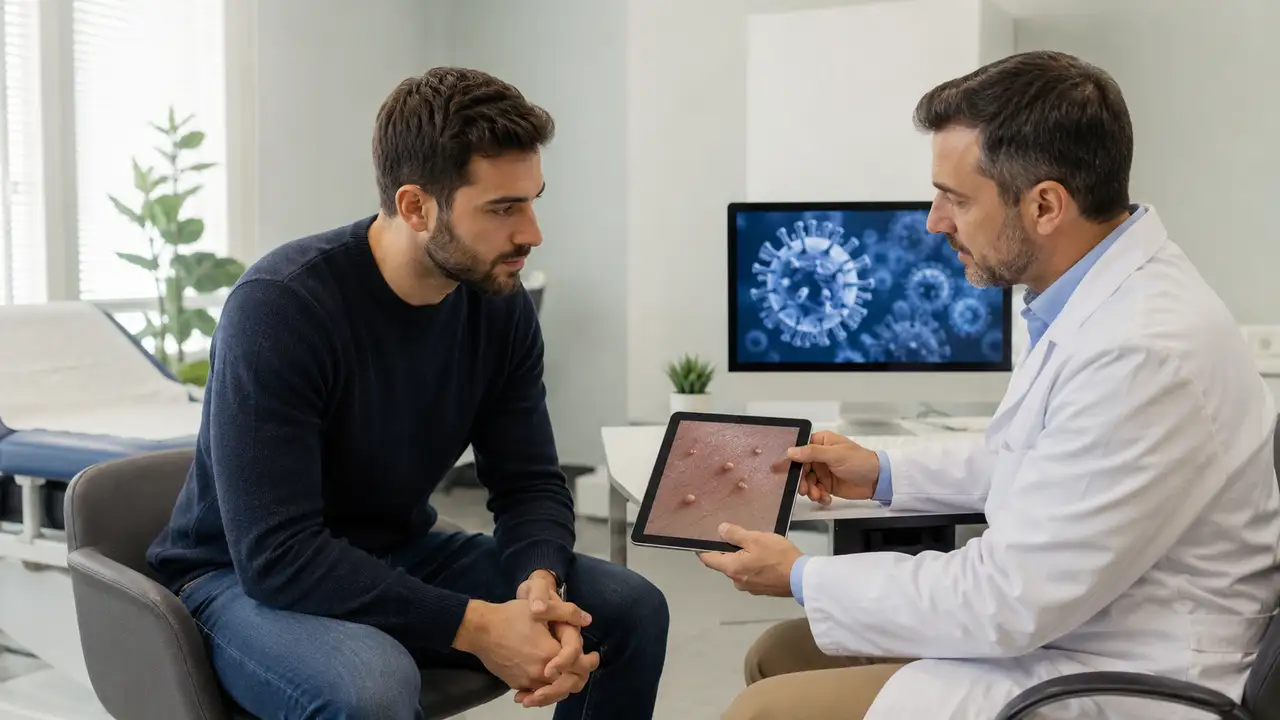
There is a particular kind of late-night search that every doctor knows well. It begins with a man in a brightly lit bathroom, angling a phone camera at a part of his body that was never designed to be photographed. It continues with an image search, a dozen alarming pictures and a steadily rising heart rate. By two in the morning, he has diagnosed himself with three conditions, ruled out one, and is drafting an apology to someone he has not yet spoken to.
The internet is a wonderful library and a terrible doctor. Bumps in the genital area can have many causes, and some of them are completely harmless. If you are reading about genital warts treatment in Singapore, the first and most useful step is often not treatment at all. It is finding out, properly, what that bump actually is.
What genital warts usually look like
Genital warts are caused by certain types of HPV. They often appear as small, raised bumps, sometimes on their own and sometimes in clusters with a slightly cauliflower-like surface. They are usually painless, although some people notice itching, irritation or mild discomfort.
They can appear on or around the genitals and anus. The tricky part is that many other harmless bumps can look vaguely similar in a blurry bathroom photo, which is exactly how the late-night spiral begins.
The harmless lookalike nobody mentions
Here is a fact that would save a great many sleepless nights. A common, completely normal feature of male anatomy is often mistaken for warts. Pearly penile papules are small, dome-shaped or thread-like, skin-coloured bumps that usually sit in neat rows around the rim of the head of the penis.
According to DermNet, a respected dermatology reference, these papules have been reported in between 8 and 43 percent of men. They are a normal anatomical variant, not caused by sexual activity or poor hygiene, and not infectious or contagious, unlike genital warts. They also need no treatment. Plenty of men have spent weeks worrying about something that was simply part of them all along.

Why you should not treat a guess
The risk of self-diagnosis is not only lost sleep. People sometimes try to remove bumps themselves with products meant for warts elsewhere on the body, or worse, with home remedies involving sharp objects or harsh chemicals. Genital skin is delicate, and treating something that is not a wart can cause real damage for no benefit at all.
Even when a bump really is a wart, the choice of treatment depends on its size, number and position. That is a decision best made after a proper look, not after an image search.
When to get it checked
You do not need to wait until you are certain something is wrong. The NHS suggests seeing a doctor or sexual health clinic if:
- You have a lump, sore or ulcer on your penis.
- You have a rash or spots on your penis.
- You notice any changes to how your penis looks.
- You have symptoms that are not going away.
The same common sense applies to any new or changing bump in the genital or anal area, whatever your gender.
What the appointment is really like
Most people imagine the visit will be long, awkward and full of uncomfortable tests. In reality, genital warts are mainly diagnosed through a clinical examination, which often means the doctor simply takes a look. In some cases, a biopsy or further testing may be suggested if something is unclear.
If the bumps do turn out to be warts, treatment options include creams applied to the warts, freezing them with liquid nitrogen, or removing them with a low-voltage electrical probe. Your doctor will explain which suits your situation, and what follow-up to expect, since warts can return after treatment.
The man in the bathroom with his phone camera was doing something very human. He was worried, and he wanted answers quickly. The fastest route to a real answer, though, is rarely a search engine. A short, matter-of-fact examination can tell you whether you are looking at genital warts, a harmless variation or something else entirely, and it can save you a great deal of worry along the way. This is general information, so please speak to a doctor about your own situation.