Losing most or all of your teeth affects far more than your smile. It changes how you eat, speak and feel about yourself. For decades, traditional dentures were the standard solution. Today, All-on-4 dental implants offer a fixed, permanent alternative that looks and functions much like natural teeth.
But which option is right for you? The answer depends on your budget, oral health, lifestyle and long-term goals. In this guide, we compare All-on-4 dental implants and traditional dentures on the three factors that matter most: cost, comfort and longevity.
What Are All-on-4 Dental Implants?
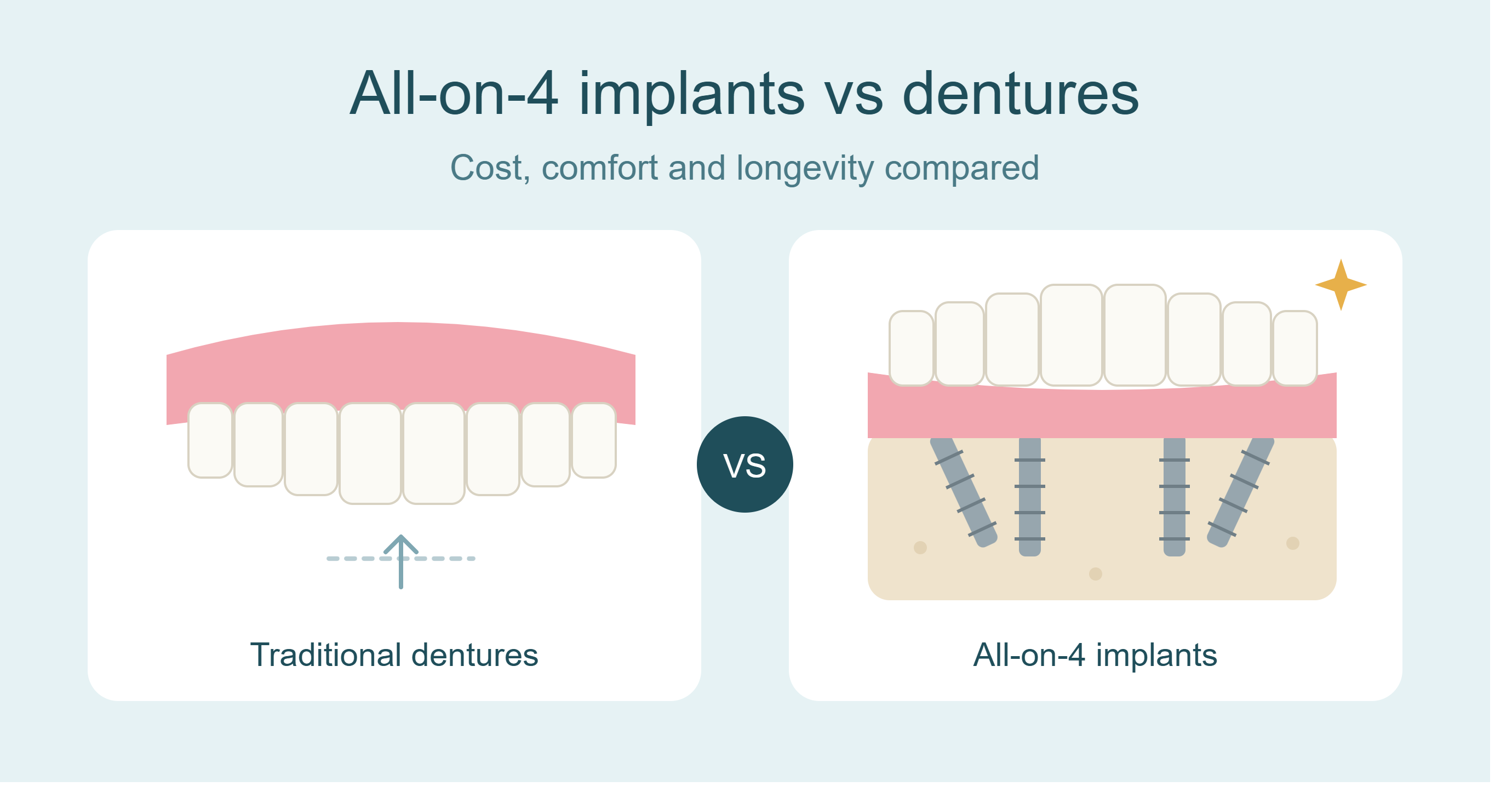
All-on-4 is a full-arch tooth replacement technique in which a complete set of upper or lower teeth is supported by just four dental implants placed in the jawbone. The two front implants are placed vertically, while the two back implants are angled to make the most of the available bone.
This angled placement is what makes All-on-4 special. It often allows patients with some bone loss to receive implants without needing a bone graft, which shortens treatment time and reduces cost.
How the All-on-4 Procedure Works
- Consultation and planning: Your dentist takes 3D scans (CBCT) to assess bone density and plan implant positions.
- Extractions and implant placement: Any remaining damaged teeth are removed and four implants are placed, usually in a single surgery.
- Temporary teeth: In many cases, a fixed temporary bridge is attached on the same day, so you leave with teeth.
- Healing (osseointegration): Over 3 to 6 months, the implants fuse with your jawbone.
- Final prosthesis: A permanent, custom-made bridge is fitted once healing is complete.
What Are Traditional Dentures?
Traditional dentures are removable replacement teeth made from acrylic, sometimes with a metal framework. A complete denture replaces an entire arch and rests directly on the gums, held in place by suction, the natural shape of the mouth and often denture adhesive.
Dentures are non-invasive, quick to make and affordable upfront, which is why they remain a popular choice. However, because they sit on the gums rather than being anchored to bone, they come with limitations in stability, comfort and long-term oral health.
Cost Comparison: All-on-4 vs Dentures
Cost is often the deciding factor, so it is worth looking beyond the initial price tag.
Upfront Cost
Traditional dentures are significantly cheaper upfront. All-on-4 dental implants involve surgery, titanium implants, 3D imaging and a custom-made fixed bridge, so the initial investment is several times higher than a set of dentures.
Long-Term Cost
The gap narrows considerably over time. Dentures come with ongoing expenses that add up:
- Relining every 1 to 2 years as the gums and jawbone shrink
- Full replacement every 5 to 8 years
- Repairs for cracks, chips or broken teeth
- Adhesives, soaking solutions and cleaning products
All-on-4 implants, by contrast, are designed to last for decades. The implants themselves can last 20 years or more with good care, while the bridge may need replacing after 10 to 15 years. When spread across a lifetime, many patients find All-on-4 offers better value.

Factors That Affect All-on-4 Cost
- Material of the final bridge (acrylic, zirconia or porcelain-fused)
- Whether one or both arches are treated
- Need for extractions or bone grafting
- Type of sedation used
- The dentist’s experience and clinic location
Comfort and Everyday Function
This is where the difference between the two options is most noticeable for patients.
Stability and Fit
All-on-4 teeth are fixed in place. They do not slip, click or move when you talk, laugh or eat. Traditional dentures, on the other hand, can loosen over time, especially lower dentures, which have less surface area for suction. Many denture wearers rely on adhesives and still experience movement.
Eating and Chewing
Because they are anchored to the jawbone, All-on-4 implants restore much of your natural bite force. You can enjoy foods like steak, apples, nuts and corn on the cob with confidence. Dentures significantly reduce chewing efficiency, which often leads wearers to avoid hard or sticky foods and can affect nutrition.
Taste and Speech
Upper dentures cover the roof of the mouth (palate), which can dull the sense of taste and temperature. All-on-4 bridges leave the palate uncovered, so food tastes the way it should. Loose dentures may also cause lisping or whistling sounds, while fixed implants allow you to speak more naturally.
Sore Spots and Irritation
Dentures press directly on the gums, which can cause sore spots, ulcers and inflammation, particularly when they no longer fit well. All-on-4 implants transfer chewing forces to the jawbone rather than the soft tissue, avoiding this problem.
Read More: Are Dental Implants Painful: What You Should Expect After Treatment
Longevity and Long-Term Oral Health
How Long Does Each Option Last?
With proper care, All-on-4 implants have high long-term success rates, with many studies reporting implant survival of over 90% after 10 years. Dentures generally need replacing every 5 to 8 years because they wear down and the mouth changes shape beneath them.
Bone Loss and Facial Structure
This is one of the most important but least discussed differences. When teeth are lost, the jawbone no longer receives stimulation and begins to shrink, a process called bone resorption. Dentures do not stop this process and may even accelerate it.
Over the years, bone loss can cause a sunken facial appearance, deeper wrinkles around the mouth and a collapsed jawline. Dental implants act like natural tooth roots, stimulating the bone and helping to preserve your facial structure.
Maintenance and Care
All-on-4 implants are cleaned much like natural teeth, with brushing, flossing under the bridge with a water flosser or special floss, and regular dental check-ups. Dentures must be removed daily, soaked overnight and cleaned separately, and they require regular adjustments.
All-on-4 vs Dentures: Side-by-Side Comparison
| Factor | All-on-4 Dental Implants | Traditional Dentures |
|---|---|---|
| Type | Fixed, permanent | Removable |
| Upfront cost | High | Low |
| Long-term cost | Lower ongoing costs | Frequent relines and replacements |
| Stability | Does not move or slip | Can loosen, may need adhesive |
| Chewing ability | Close to natural teeth | Significantly reduced |
| Taste | Unaffected (palate uncovered) | May be dulled by upper denture |
| Bone preservation | Helps preserve jawbone | Does not prevent bone loss |
| Lifespan | Implants 20+ years; bridge 10–15 years | 5–8 years |
| Surgery required | Yes | No |
| Treatment time | Same-day temporary teeth; final in 3–6 months | A few weeks |
| Daily care | Brush and floss like natural teeth | Remove, soak and clean daily |
Which Option Is Right for You?
All-on-4 May Be Best If You:
- Want a permanent, fixed solution that feels like natural teeth
- Are tired of loose, uncomfortable dentures
- Want to preserve your jawbone and facial structure
- Are in good general health and able to undergo minor surgery
- See tooth replacement as a long-term investment
Traditional Dentures May Be Best If You:
- Need the most affordable upfront option
- Have medical conditions that make surgery unsafe
- Prefer a non-invasive treatment
- Need a quick, temporary solution while planning future treatment
Who May Not Be a Candidate for All-on-4?
People with uncontrolled diabetes, heavy smoking habits, severe gum disease, certain bone disorders, or those undergoing radiation therapy to the head and neck may need additional treatment first or may not be suitable candidates. A thorough consultation is essential.
It is also worth knowing there is a middle ground: implant-supported overdentures, which are removable dentures that snap onto two to four implants. They offer better stability than traditional dentures at a lower cost than a fixed All-on-4 bridge.
FAQ
Is All-on-4 better than dentures?
For most people who are suitable candidates, All-on-4 offers better stability, comfort, chewing ability and bone preservation. However, dentures remain a practical choice for those with budget limits or health conditions that prevent surgery.
Is the All-on-4 procedure painful?
The surgery is performed under local anaesthesia or sedation, so you should not feel pain during treatment. Mild swelling, discomfort and bruising are common for a few days afterwards and are usually managed with prescribed medication.
Can I get All-on-4 if I have been wearing dentures for years?
Yes, many long-term denture wearers successfully switch to All-on-4. Because the back implants are angled, the technique often works even when some bone loss has occurred, although a 3D scan is needed to confirm suitability.
How long do All-on-4 dental implants last?
The implants can last 20 years or more, and potentially a lifetime, with good oral hygiene and regular check-ups. The bridge attached to the implants typically lasts 10 to 15 years before it may need replacement.
Can I eat normally with All-on-4 implants?
Once healing is complete and your final bridge is fitted, you can eat most foods comfortably. During the first few months, your dentist will recommend a soft diet to protect the implants while they fuse with the bone.
Conclusion
Choosing between All-on-4 dental implants and traditional dentures comes down to what you value most. Dentures are affordable and non-invasive upfront, but they come with ongoing costs, reduced comfort and continued bone loss. All-on-4 dental implants require a higher initial investment and minor surgery, but they deliver a fixed, natural-feeling smile that can last for decades and help protect your facial structure.
The best way to decide is to speak with an experienced implant dentist who can assess your bone health, discuss your budget and create a personalised treatment plan. Book your consultation today and take the first step toward a confident, lasting smile.
Disclaimer: This article is for informational purposes only and does not replace professional dental advice. Treatment suitability and results vary between individuals.