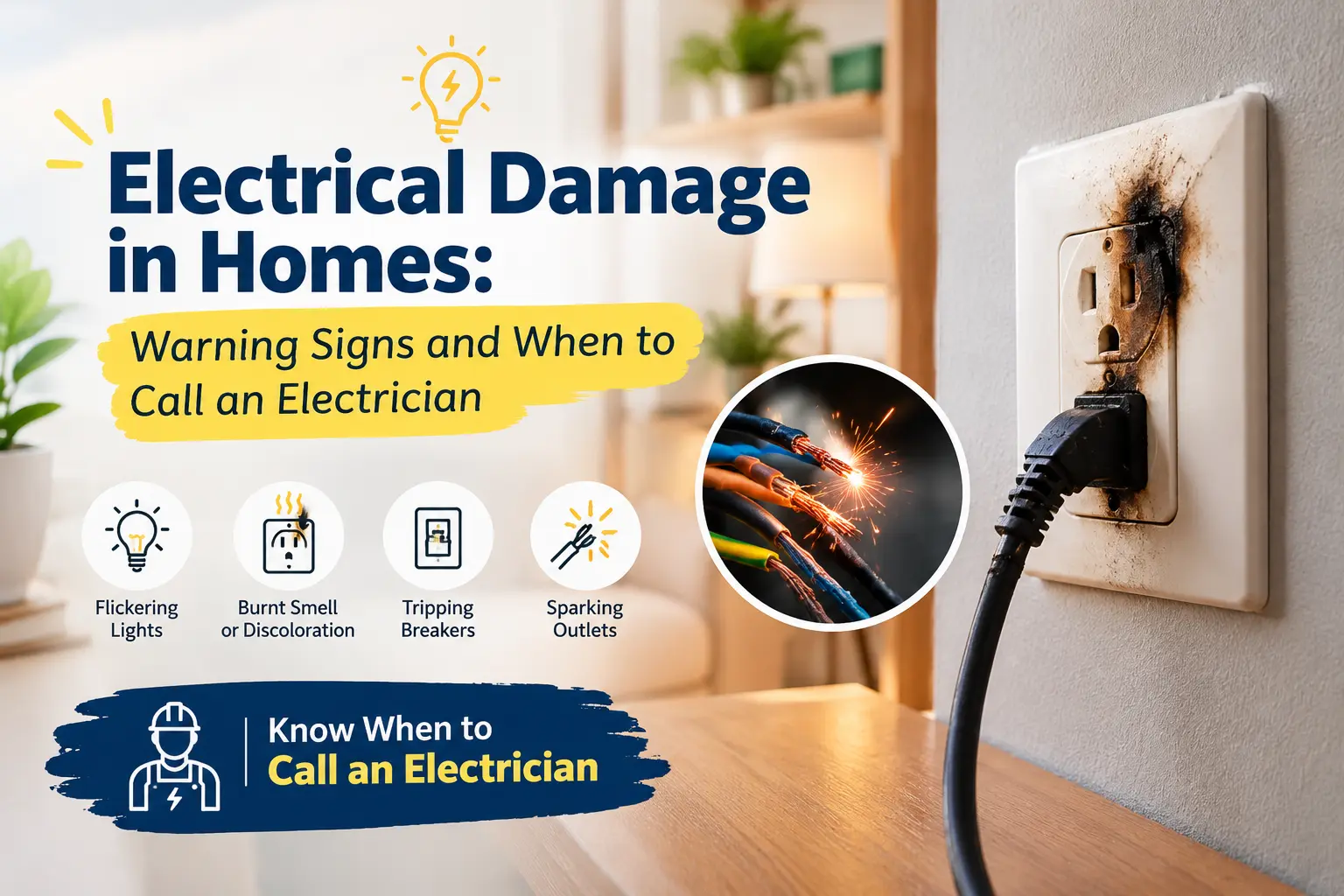
Your home’s electrical system works quietly behind walls, ceilings, and floors, so it’s easy to forget about it until something goes wrong. Electrical damage often starts small and builds over time, and many problems give clear warning signs long before they become dangerous. Recognising these signs early can protect your family, prevent costly repairs, and reduce the risk of electrical fires.
In this guide, we’ll cover the most common warning signs of electrical damage in homes, what causes these problems, and when it’s time to call a professional electrician.
Why Electrical Damage Is a Serious Concern
Electrical faults are among the leading causes of residential fires. Damaged wiring, overloaded circuits, and worn-out components can overheat, spark, or short-circuit without warning. Beyond fire risk, faulty electrical systems can cause electric shocks, damage expensive appliances, and increase your electricity bills.
The good news is that most electrical problems can be fixed safely and affordably when caught early. The key is knowing what to look for.
Common Causes of Electrical Damage in Homes
Understanding what causes electrical damage helps you prevent it. The most common causes include ageing wiring, which deteriorates as insulation becomes brittle over decades; overloaded circuits from running too many high-power appliances on one line; power surges caused by lightning, grid fluctuations, or heavy appliances switching on and off; water damage from leaks, flooding, or high humidity reaching wiring and outlets; rodents and pests chewing through wire insulation; and poor DIY or unlicensed electrical work that doesn’t meet safety standards.
10 Warning Signs of Electrical Damage in Your Home
1. Flickering or Dimming Lights
Occasional flickering when a large appliance starts up may be normal, but frequent or persistent flickering often points to loose connections, an overloaded circuit, or failing wiring. If lights dim noticeably every time you use the microwave, air conditioner, or washing machine, your circuit may be struggling to handle the load.
2. Frequently Tripping Circuit Breakers
Circuit breakers are designed to trip when a circuit is overloaded or a fault is detected. A breaker that trips once in a while isn’t usually a concern, but one that trips repeatedly is a sign that something is wrong. The cause could be an overloaded circuit, a short circuit, or a ground fault that needs professional attention.
3. Burning Smell With No Obvious Source
A burning plastic or fishy odour near outlets, switches, or the electrical panel is one of the most urgent warning signs. It often means wire insulation or electrical components are overheating. If you notice this smell, switch off power to the affected area at the main panel if it’s safe to do so, and call an electrician immediately.
4. Warm or Hot Outlets and Switches
Outlets and switch plates should never feel warm to the touch. Heat indicates excessive current flow, loose wiring, or a faulty device. Stop using the outlet and have it inspected as soon as possible.
5. Scorch Marks or Discolouration
Black, brown, or yellowish marks around outlets and switches are evidence of arcing or overheating. These marks mean sparks or heat have already damaged the area, and the risk of fire is real.

6. Buzzing, Crackling, or Sizzling Sounds
Electricity should be silent. If you hear buzzing from outlets, switches, light fixtures, or your electrical panel, it could indicate loose connections, damaged wiring, or arcing. Arcing is a major cause of electrical fires and should never be ignored.
7. Sparks From Outlets
A tiny, brief spark when plugging in an appliance can happen occasionally. However, large sparks, frequent sparking, or sparks accompanied by a popping sound or burning smell signal a serious problem with the outlet or wiring behind it.
8. Mild Electric Shocks
Feeling a tingle or mild shock when touching an appliance, switch, or outlet is a clear sign of a grounding problem or faulty wiring. Even small shocks are a warning that current is escaping where it shouldn’t, and the next shock could be more dangerous.
9. Loose or Damaged Outlets
Plugs that fall out easily, cracked outlet covers, or outlets that wobble in the wall can expose wiring and create poor connections. Poor connections generate heat, which increases the risk of fire over time.
10. Unusually High Electricity Bills
A sudden spike in your electricity bill without a change in usage can sometimes point to electrical faults, such as current leakage, failing appliances, or damaged wiring that wastes energy.
Signs Your Home May Need Rewiring
Some homes need more than a simple repair. Consider a professional inspection for full or partial rewiring if your home is more than 25 to 30 years old and has never had its wiring updated, you rely heavily on extension cords and power strips because there aren’t enough outlets, you still have an old fuse box instead of a modern circuit breaker panel, or you’ve recently added major appliances such as air conditioners, geysers, or EV chargers that your existing system wasn’t designed to support.
When to Call an Electrician
Some electrical issues can wait for a scheduled appointment, while others require immediate action.
Call an electrician immediately if you notice:
- A burning smell, smoke, or visible sparks from outlets, switches, or the panel.
- Electric shocks from appliances, switches, or fixtures.
- Scorch marks, melted outlet covers, or hot switch plates.
- Buzzing or crackling coming from your electrical panel.
- Electrical components that have been exposed to water or flooding.
Schedule an inspection soon if you experience:
- Frequent breaker trips or blown fuses.
- Persistent flickering or dimming lights.
- Loose outlets or plugs that don’t stay in place.
- An older home that hasn’t had an electrical inspection in several years.
- Plans for renovations or adding high-power appliances.
Read More: The Role of Electricians in Residential and Commercial Projects
What to Do While Waiting for an Electrician
If you suspect electrical damage, safety comes first. Turn off power to the affected circuit at the breaker panel if you can do so safely, and unplug appliances connected to the problem outlet. Avoid touching any outlet, switch, or appliance that is sparking, smoking, or wet. If there is visible smoke or fire, leave the house and call the fire department right away. Never attempt to open electrical panels or repair wiring yourself unless you are qualified, as this can lead to serious injury.
Why You Should Always Hire a Licensed Electrician
It can be tempting to fix small electrical problems yourself or hire someone without proper credentials to save money. However, electrical work requires specialised training and knowledge of safety codes. A licensed electrician can accurately diagnose the root cause of a problem, ensure repairs meet local safety standards, use the right tools and materials, and identify hidden hazards you might miss. Professional work also protects your home insurance coverage, since damage from unlicensed electrical work may not be covered.
How to Prevent Electrical Damage in Your Home
Prevention is always easier and cheaper than repair. A few simple habits can keep your electrical system in good condition:
- Schedule regular inspections, ideally every three to five years, or more often for older homes.
- Avoid overloading outlets with multiple high-power appliances or chained extension cords.
- Install surge protectors to shield sensitive electronics from voltage spikes.
- Use RCDs or ELCBs to protect against electric shocks, especially in kitchens and bathrooms.
- Replace damaged cords and plugs instead of taping or patching them.
- Keep water away from outlets, switches, and electrical appliances.
- Watch for pest activity in attics, ceilings, and storage areas where wiring runs.
Frequently Asked Questions
Is a flickering light always a sign of electrical damage?
Not always. A loose bulb or a faulty fixture can cause flickering. But if flickering affects multiple lights or happens frequently, it’s worth having your wiring checked.
How often should home wiring be inspected?
Most experts recommend a professional inspection every three to five years, and every year or two for homes older than 25 years.
Can a power surge damage my home’s wiring?
Yes. Strong surges, especially from lightning, can damage wiring, outlets, and connected appliances. Whole-home surge protection can reduce this risk.
Is it safe to use an outlet that sparks occasionally?
It’s best to stop using any outlet that sparks repeatedly or shows signs of burning, and have it inspected by an electrician.
How long does home wiring last?
Modern copper wiring can last 50 years or more, but insulation, connections, and outlets may wear out sooner depending on usage and conditions.
Conclusion
Electrical damage rarely appears overnight. Flickering lights, warm outlets, burning smells, and frequent breaker trips are your home’s way of warning you that something needs attention. Acting on these signs early can prevent fires, protect your appliances, and keep your family safe.
If you notice any of the warning signs mentioned above, don’t wait for the problem to get worse. Contact a licensed electrician for a thorough inspection and peace of mind.