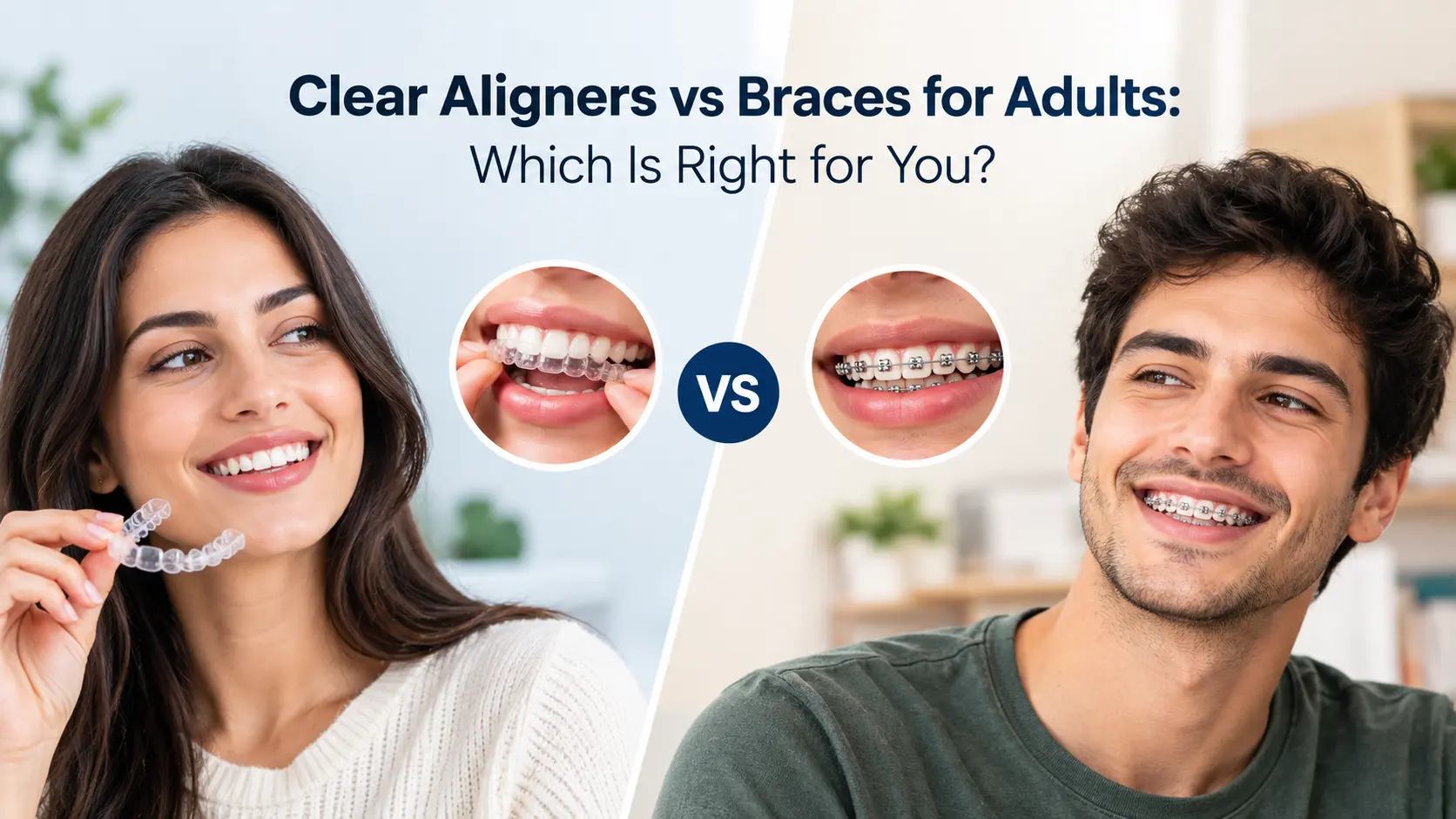
It’s never too late to get the straight, healthy smile you’ve always wanted. More adults than ever are choosing orthodontic treatment, whether to fix crooked teeth they’ve had since childhood, close gaps, correct a bite problem, or address teeth that have shifted over time.
If you’re an adult considering teeth straightening, you’ve probably narrowed your options down to two choices: clear aligners or traditional braces. Both can deliver excellent results, but they differ in appearance, comfort, lifestyle impact, cost, and the types of cases they treat best.
In this guide, we’ll compare clear aligners vs braces for adults so you can decide which option fits your teeth, your lifestyle, and your goals.
Why More Adults Are Getting Orthodontic Treatment
Straight teeth aren’t just about looks. Properly aligned teeth are easier to clean, which can lower the risk of cavities and gum disease. Correcting a misaligned bite can also reduce uneven tooth wear, jaw strain, and difficulty chewing.
Many adults also seek treatment because their teeth have shifted with age, or because they stopped wearing retainers after childhood braces. Modern, discreet options have made orthodontic treatment much more appealing for working professionals.
What Are Clear Aligners?
Clear aligners are a series of custom-made, removable plastic trays that fit snugly over your teeth. Each set of aligners is designed to move your teeth slightly. You switch to a new set every one to two weeks, gradually shifting your teeth into their planned position.
Treatment usually begins with a digital scan of your teeth, which is used to create a 3D treatment plan. Small tooth-colored bumps called “attachments” may be bonded to some teeth to help the aligners grip and move them more precisely.
For clear aligners to work, they need to be worn for about 20 to 22 hours a day. They should only be removed for eating, drinking anything other than water, and brushing.
In-Office vs At-Home Aligners
Aligners prescribed and monitored by an orthodontist or dentist are different from direct-to-consumer kits that are mailed to your home. In-office treatment includes a full examination, X-rays, and regular check-ups, which helps catch problems early. For adults, especially those with gum issues, dental work, or bite problems, professional supervision is strongly recommended.
What Are Braces?
Braces are fixed orthodontic appliances made up of brackets bonded to the teeth and connected by a wire. Your orthodontist adjusts the wire at regular appointments, usually every four to eight weeks, to gradually move your teeth.
Modern braces are smaller and more comfortable than they used to be, and adults can choose from several types:
- Metal braces: The most common and usually the most affordable option. They are strong, reliable, and effective for all types of cases.
- Ceramic braces: Clear or tooth-colored brackets that blend in with your teeth, making them much less noticeable than metal.
- Lingual braces: Brackets placed on the back of the teeth so they’re hidden from view. They are more expensive and can take longer to get used to.
- Self-ligating braces: Brackets that hold the wire with a built-in clip instead of elastic bands, which may mean fewer adjustments.
Clear Aligners vs Braces: Side-by-Side Comparison
Here’s a quick look at how clear aligners and braces compare for adults:
| Factor | Clear Aligners | Braces |
|---|---|---|
| Appearance | Nearly invisible | Visible (less so with ceramic or lingual) |
| Removable | Yes | No |
| Daily wear needed | 20 to 22 hours | Worn 24/7 automatically |
| Eating restrictions | None (remove to eat) | Avoid hard, sticky, and chewy foods |
| Oral hygiene | Easy to brush and floss normally | Requires extra time and special tools |
| Comfort | Smooth plastic, mild pressure | Brackets may irritate cheeks and lips |
| Treatment time | Often 6 to 18 months for mild to moderate cases | Often 12 to 24 months or more |
| Best for | Mild to moderate crowding, gaps, and bite issues | All cases, including complex ones |
| Office visits | Fewer, often every 6 to 10 weeks | More frequent adjustments |
| Patient discipline | High | Low |
Treatment times vary widely depending on the complexity of your case, so your orthodontist will give you a personalized estimate.
Benefits of Clear Aligners for Adults
- Discreet appearance: Aligners are hard to notice, which makes them popular with professionals who don’t want visible braces at work or in social settings.
- Removable for meals: You can eat whatever you like, since you take the aligners out before eating.
- Easier oral hygiene: You can brush and floss normally, which helps protect your gums during treatment.
- More comfortable: There are no metal wires or brackets to poke your cheeks or lips.
- Fewer emergencies: There are no broken brackets or loose wires to fix.
- Preview of results: Digital treatment planning lets you see a simulation of your expected results before starting.
Benefits of Braces for Adults
- Effective for complex cases: Braces can handle severe crowding, significant bite problems, major rotations, and large tooth movements more predictably.
- No discipline required: Because braces are fixed, they work around the clock without you needing to remember to wear them.
- Precise control: Orthodontists can make fine adjustments to every tooth.
- Often more affordable: Traditional metal braces are frequently less expensive than clear aligners, although costs vary by case and location.
- Discreet options available: Ceramic and lingual braces offer a less visible alternative to metal.
Read More: Exploring Different Types of Braces for a Perfect Smile
Drawbacks to Consider
Clear Aligner Drawbacks
- Requires commitment: If you don’t wear them for 20 to 22 hours a day, your treatment can stall or fail.
- Easy to lose or damage: Removing aligners often increases the risk of misplacing them.
- Must remove to eat and drink: You need to take them out for anything other than plain water, then brush before putting them back in.
- Not ideal for all cases: Very complex movements may need braces or a combination approach.
- Possible speech changes: Some people experience a slight lisp for the first few days.

Braces Drawbacks
- More visible: Metal braces are noticeable, although ceramic and lingual options help.
- Food restrictions: Hard, sticky, and chewy foods like popcorn, nuts, caramel, and hard candy can damage brackets.
- Harder to clean: Food can get trapped around brackets, increasing the risk of plaque buildup and white spots.
- Mouth irritation: Brackets and wires may rub against your cheeks and lips, especially at first.
- More frequent appointments: Regular adjustments are needed throughout treatment.
Cost of Clear Aligners vs Braces
The cost of orthodontic treatment depends on the complexity of your case, the length of treatment, your location, and the provider you choose. In general:
- Metal braces are usually the most affordable option.
- Ceramic braces cost a bit more than metal.
- Clear aligners are often in a similar range to ceramic braces, though prices vary by brand and case.
- Lingual braces are typically the most expensive.
Many clinics offer monthly payment plans, and some dental insurance plans provide partial coverage for adult orthodontics. Always ask for a detailed quote that includes retainers and follow-up visits.
Which Is Right for You?
Your orthodontist is the best person to recommend a treatment, but these guidelines can help.
Clear Aligners May Be Right for You If:
- You have mild to moderate crowding, spacing, or bite issues
- Appearance during treatment is important to you, especially at work
- You’re disciplined enough to wear aligners for 20 to 22 hours a day
- You want to keep eating your favorite foods
- Your teeth have shifted after previous braces
Braces May Be Right for You If:
- You have severe crowding, major bite problems, or complex tooth movements
- You prefer not to worry about remembering to wear an appliance
- You want the most cost-effective option
- Your orthodontist believes braces will give you a more predictable result
Special Considerations for Adults
Adult orthodontic treatment comes with a few extra factors to keep in mind:
- Gum and bone health matter: Gum disease should be treated before orthodontic treatment begins, since moving teeth through unhealthy gums can cause problems.
- Existing dental work: Crowns, bridges, implants, and missing teeth can affect your treatment plan. Implants, for example, can’t be moved with orthodontics.
- Teeth may move more slowly: Adult bone is denser than a teenager’s, so treatment can sometimes take a little longer.
- Retainers are essential: After either treatment, you’ll need to wear a retainer to keep your teeth from shifting back. Many orthodontists recommend wearing retainers at night long term.
Frequently Asked Questions
Are clear aligners as effective as braces?
For mild to moderate cases, clear aligners can be just as effective as braces when worn as directed. For complex cases, braces are often more predictable.
Which works faster, aligners or braces?
For simple cases, aligners can sometimes work faster. For complex cases, braces may be quicker. Treatment time depends mostly on your specific case and how consistently you follow instructions.
Do clear aligners hurt?
Most people feel mild pressure or soreness for a day or two after switching to a new set. This usually fades quickly.
Am I too old for braces or clear aligners?
No. Healthy teeth can be moved at any age, as long as your gums and supporting bone are in good condition.
Do I need a retainer after clear aligners or braces?
Yes. A retainer is needed after both treatments to keep your teeth in their new positions.
Conclusion
Both clear aligners and braces can give adults a straighter, healthier smile. Clear aligners offer a nearly invisible, removable, and convenient option for mild to moderate cases, as long as you’re committed to wearing them. Braces remain the most reliable choice for complex cases and work without requiring daily discipline.
The best way to find out which option is right for you is to visit a qualified orthodontist. A thorough examination, including scans and X-rays, will help determine which treatment can give you the best results. Book a consultation today and take the first step toward your new smile.
Disclaimer: This article is for informational purposes only and is not a substitute for professional dental advice. Consult a qualified orthodontist or dentist before starting any treatment.