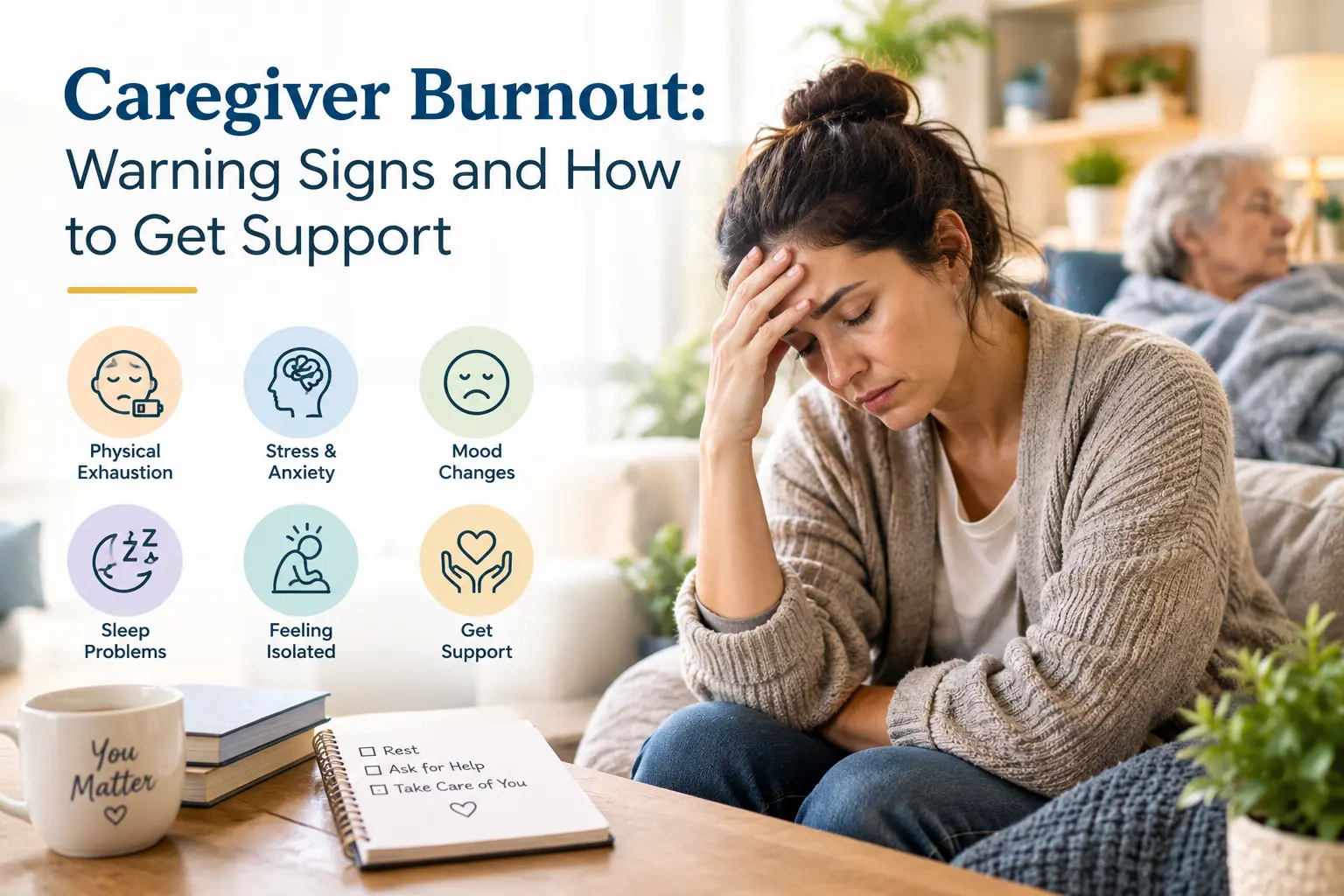
Caring for someone you love is one of the most meaningful things you can do. It can also be one of the most draining. Whether you’re looking after an ageing parent, a spouse with a chronic illness, or a child with special needs, the daily demands can slowly wear you down, often without you noticing until you’re running on empty.
This state of physical, emotional, and mental exhaustion is called caregiver burnout. It’s common, it’s real, and it’s nothing to feel ashamed of. In this guide, you’ll learn what caregiver burnout is, the warning signs to watch for, what causes it, and practical ways to get the support you need.
What Is Caregiver Burnout?
Caregiver burnout is a state of deep exhaustion that develops when the stress of caregiving continues for a long time without enough rest or support. It goes beyond ordinary tiredness. Burnout can change how you feel about yourself, the person you care for, and caregiving itself.
Many caregivers start out full of energy and compassion. Over time, constant responsibilities, disrupted sleep, financial pressure, and emotional strain can turn that compassion into frustration, guilt, or numbness. If left unaddressed, burnout can affect both your health and the quality of care you’re able to give.
Caregiver Stress vs. Caregiver Burnout
Stress and burnout are related but not the same. Understanding the difference helps you act early.
| Caregiver Stress | Caregiver Burnout |
|---|---|
| Feeling overwhelmed but still engaged | Feeling detached, hopeless, or empty |
| Emotions are intense and reactive | Emotions feel blunted or numb |
| Energy is low but recovers with rest | Exhaustion persists even after rest |
| Sense of urgency and overactivity | Loss of motivation and withdrawal |
| Usually short-term | Builds up over months or years |
Stress is often the stage before burnout. Recognising it early gives you the best chance of preventing a full crash.
Warning Signs of Caregiver Burnout
The signs of caregiver burnout often creep in gradually. Pay attention if you notice several of the following over weeks or months.
Physical Signs
- Constant fatigue, even after a full night’s sleep
- Trouble falling asleep or staying asleep, or sleeping far more than usual
- Frequent headaches, body aches, or stomach problems
- Getting sick more often due to a weakened immune system
- Noticeable changes in appetite or weight
- Neglecting your own medical appointments or medications
Emotional Signs
- Feeling irritable, impatient, or quick to anger
- Persistent sadness, anxiety, or a sense of hopelessness
- Feeling resentful toward the person you care for, followed by guilt
- Feeling trapped, as if there’s no way out
- Crying more often or feeling emotionally numb
- Loss of interest in things you used to enjoy
Behavioural Signs
- Withdrawing from friends, family, and social activities
- Relying more on alcohol, smoking, caffeine, or comfort eating to cope
- Difficulty concentrating or making decisions
- Becoming less patient or more rough with the person you care for
- Ignoring your own needs completely
If you’ve ever had thoughts of harming yourself or the person you care for, please treat this as a signal to reach out for help right away. Contact a doctor, a mental health helpline in your country, or someone you trust today.
What Causes Caregiver Burnout?
Understanding the root causes of caregiver fatigue makes it easier to address them. Common contributors include:
- Role confusion: It can be hard to separate being a caregiver from being a son, daughter, spouse, or friend. The relationship you once had may feel lost.
- Unrealistic expectations: Many caregivers believe their efforts should improve their loved one’s health or happiness, which isn’t always possible with progressive conditions.
- Lack of control: Limited money, resources, or time can leave you feeling powerless.
- Unreasonable demands: Caregivers often take on too much, sometimes because they feel it’s solely their duty, or because family members don’t share the load.
- No time for yourself: Without breaks, there’s no opportunity to recharge.
- Financial strain: Medical bills, reduced work hours, or leaving a job entirely can add enormous pressure.
- Isolation: Caregiving can shrink your social world, leaving you without emotional outlets.

How to Get Support for Caregiver Burnout
The good news is that caregiver burnout can be prevented and treated. Recovery usually involves a mix of practical help, emotional support, and small daily changes.
1. Acknowledge How You Feel
The first step is admitting that you’re struggling. Feeling exhausted or resentful doesn’t make you a bad caregiver. It makes you human. Naming your feelings, whether in a journal or out loud to someone you trust, reduces their power over you.
2. Ask for Help and Accept It
Many caregivers try to do everything alone. Make a list of specific tasks others could take on, such as grocery shopping, driving to appointments, cooking a meal, or sitting with your loved one for an afternoon. When someone offers help, hand them something from the list. Specific requests are easier for people to say yes to.
3. Explore Respite Care
Respite care gives you a temporary break while someone else looks after your loved one. Options may include:
- In-home care from a trained caregiver or nurse
- Adult day care centres
- Short-term stays at an assisted living or care facility
- Family members or friends taking scheduled shifts
Even a few hours a week can make a real difference to your energy and mood.
4. Join a Caregiver Support Group
Talking to people who truly understand what you’re going through can be a huge relief. Support groups, both in person and online, offer a safe space to share experiences, vent frustrations, and pick up practical tips. Many hospitals, community centres, and condition-specific organisations run groups for caregivers.
5. Talk to a Professional
A therapist or counsellor can help you work through guilt, grief, anger, and anxiety. If you’re experiencing symptoms of depression or anxiety, your doctor can assess you and discuss treatment options. Seeking professional support is a sign of strength, not weakness.
6. Look After Your Physical Health
It’s easy to put your own health last, but you can’t pour from an empty cup. Try to:
- Keep up with your own medical check-ups
- Eat regular, balanced meals
- Move your body daily, even a 15-minute walk helps
- Protect your sleep as much as possible
- Limit alcohol and caffeine
7. Set Realistic Goals and Boundaries
Break large tasks into smaller steps and prioritise what truly matters. Learn to say no to requests that drain you. Accept that some days won’t go as planned, and that’s okay. Good enough care is still good care.
8. Make Time for Yourself
Schedule time for activities that bring you joy or calm, whether that’s reading, gardening, prayer, music, or meeting a friend for tea. Treat this time as non-negotiable, just like a medical appointment.
9. Look Into Financial and Practical Resources
Check whether you’re eligible for government schemes, insurance benefits, caregiver allowances, or workplace leave policies. Social workers at hospitals can often guide you toward resources you may not know about.
Tips to Prevent Caregiver Burnout in the Long Run
Prevention is easier than recovery. Build these habits into your routine:
- Check in with yourself weekly. Rate your stress level and notice any warning signs early.
- Keep a support network. Stay connected with at least a few people outside your caregiving role.
- Learn about your loved one’s condition. Knowing what to expect reduces anxiety and helps you plan.
- Hold family meetings. Share responsibilities fairly and revisit the plan as needs change.
- Plan ahead. Prepare for future care needs before a crisis forces quick decisions.
Also read, Memory Care: Understanding and Supporting Individuals with Dementia
Frequently Asked Questions
What are the first signs of caregiver burnout?
Early signs often include ongoing tiredness, irritability, trouble sleeping, and pulling away from friends or hobbies. Many caregivers also notice growing feelings of resentment or guilt.
How long does it take to recover from caregiver burnout?
Recovery time varies. With proper rest, support, and changes to your caregiving routine, many people begin to feel better within a few weeks to a few months. Severe burnout may take longer and benefit from professional help.
Can caregiver burnout lead to depression?
Yes. Prolonged caregiver stress can increase the risk of depression and anxiety. If low mood, hopelessness, or loss of interest lasts more than two weeks, speak to a doctor or mental health professional.
Is it normal to feel resentment as a caregiver?
Absolutely. Resentment is a common and natural reaction to long-term caregiving pressure. It doesn’t mean you love the person any less. It’s often a sign that you need more support or a break.
What is respite care and how can it help?
Respite care is short-term care that gives primary caregivers a break. It can be provided at home, at a day centre, or in a residential facility, and helps reduce caregiver fatigue by giving you time to rest and recharge.
Conclusion
Caregiver burnout doesn’t happen overnight, and it doesn’t mean you’ve failed. It’s a signal that you’ve been giving more than you’ve been receiving for too long. By recognising the warning signs early, asking for help, using respite care, and making your own wellbeing a priority, you can protect your health and continue caring for your loved one with compassion.
If you see yourself in the signs described above, take one small step today. Call a friend, book a doctor’s appointment, or look up a local caregiver support group. Caring for yourself is part of caring for them.