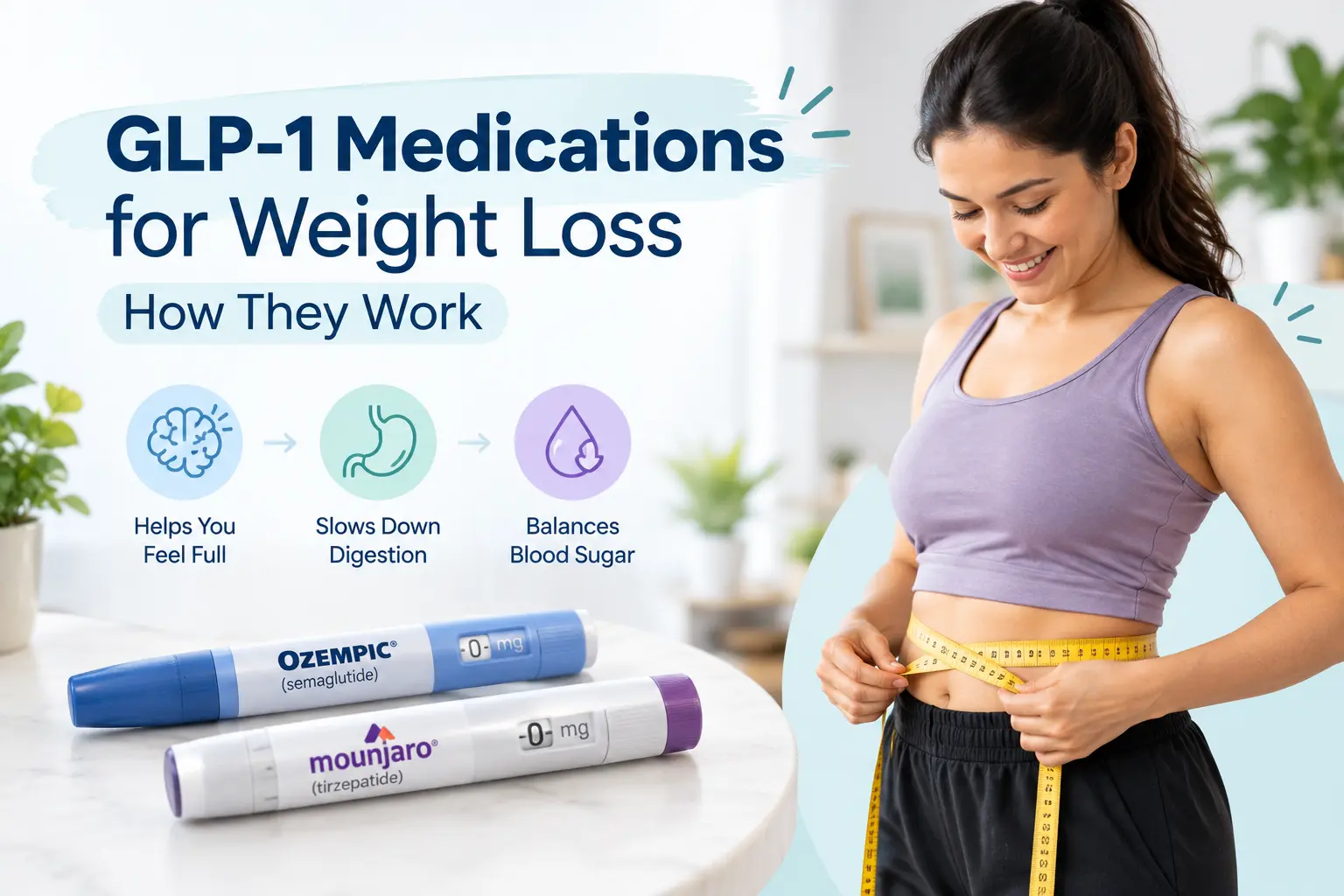
Few medications have changed the conversation about weight as much as GLP-1 drugs. Names like Ozempic, Wegovy, Mounjaro, and Zepbound are now everywhere, from doctors’ offices to social media feeds. Many people have experienced significant weight loss with them, but there’s also a lot of confusion about what they are, how they work, and who they’re meant for.
This guide explains what GLP-1 medications are, how Ozempic and Mounjaro work in the body, how they differ, what results to expect, the side effects to know about, and the important questions to ask before considering one.
What Are GLP-1 Medications?
GLP-1 stands for glucagon-like peptide-1, a hormone your gut naturally releases after you eat. It helps regulate blood sugar and signals to your brain that you’re full.
GLP-1 medications, also called GLP-1 receptor agonists, mimic this natural hormone. Because the body breaks down natural GLP-1 within minutes, these medications are designed to last much longer, which is why many can be taken just once a week.
These drugs were originally developed to treat type 2 diabetes. Researchers noticed that patients also lost significant weight, which led to versions being approved specifically for chronic weight management.
Ozempic and Mounjaro: The Basics
It helps to understand the brand names, because the same drug is often sold under different names depending on what it’s approved for.
Semaglutide (made by Novo Nordisk):
- Ozempic: weekly injection approved for type 2 diabetes
- Wegovy: weekly injection approved for chronic weight management, now also available as a daily pill
- Rybelsus: daily pill approved for type 2 diabetes
Tirzepatide (made by Eli Lilly):
- Mounjaro: weekly injection approved for type 2 diabetes
- Zepbound: weekly injection approved for chronic weight management (in the U.S.)
So when people say they’re “on Ozempic for weight loss,” they’re often using semaglutide either off-label or under its weight-loss brand, Wegovy. Similarly, Mounjaro and Zepbound contain the same active ingredient. Brand names and approvals can differ by country. In India, for example, Mounjaro is approved for both type 2 diabetes and weight management.
How Do GLP-1 Medications Cause Weight Loss?
GLP-1 medications work on several systems in the body at once.
1. They Reduce Appetite in the Brain
GLP-1 receptors are found in areas of the brain that control hunger and satiety. By activating these receptors, the medications reduce hunger and increase feelings of fullness. Many users also report less “food noise,” the constant thoughts and cravings about food.
2. They Slow Stomach Emptying
These drugs slow down how quickly food leaves the stomach. Food stays in the stomach longer, so you feel full sooner and stay full longer after meals.
3. They Help Regulate Blood Sugar
GLP-1 medications stimulate insulin release when blood sugar is high and reduce the release of glucagon, a hormone that raises blood sugar. This helps stabilize blood sugar levels, which is why they’re so effective for type 2 diabetes.
4. They May Change Food Preferences
Some people notice they’re less drawn to fatty, sugary, or highly processed foods, or to alcohol. Research into this effect is ongoing.
The overall result is that people naturally eat less, which leads to a calorie deficit and weight loss over time.
How Mounjaro Is Different: The Dual-Action Approach
Ozempic (semaglutide) works on one hormone pathway: GLP-1.
Mounjaro (tirzepatide) works on two. In addition to GLP-1, it also mimics GIP (glucose-dependent insulinotropic polypeptide), another gut hormone involved in blood sugar control and metabolism. This makes tirzepatide a dual GIP/GLP-1 receptor agonist.
Scientists believe that activating both pathways together may enhance appetite reduction and improve how the body processes sugar and fat, which may explain why tirzepatide has produced greater average weight loss in clinical trials.
Ozempic vs Mounjaro: Key Differences
| Feature | Ozempic / Wegovy | Mounjaro / Zepbound |
|---|---|---|
| Active ingredient | Semaglutide | Tirzepatide |
| Manufacturer | Novo Nordisk | Eli Lilly |
| Mechanism | GLP-1 receptor agonist | Dual GIP and GLP-1 receptor agonist |
| How it’s taken | Weekly injection (oral options available) | Weekly injection |
| Average weight loss in key trials | About 15% of body weight | Up to about 21% of body weight |
| Common side effects | Nausea, vomiting, diarrhea, constipation | Similar gastrointestinal effects |
How Much Weight Can You Lose?
Results vary widely from person to person, but large clinical trials give a useful picture.
- In the major STEP 1 trial, adults with obesity taking weekly semaglutide (Wegovy) lost an average of about 15% of their body weight over roughly 68 weeks, alongside lifestyle changes.
- In the SURMOUNT-1 trial, adults taking the highest dose of tirzepatide lost an average of about 21% of their body weight over 72 weeks.
Weight loss is usually gradual. Doses typically start low and are increased slowly over several weeks or months to help the body adjust and reduce side effects. Your doctor decides the right dose and schedule for you.
It’s also important to know that some people lose much less, and a small percentage don’t respond well.
Health Benefits Beyond Weight Loss
GLP-1 medications may offer benefits beyond the number on the scale, including:
- Better blood sugar control in people with type 2 diabetes or prediabetes
- Reduced cardiovascular risk: Semaglutide has been shown to lower the risk of major heart events like heart attack and stroke in certain adults with heart disease and obesity
- Improved blood pressure and cholesterol levels
- Benefits for obstructive sleep apnea: Tirzepatide has been approved in the U.S. to treat moderate to severe sleep apnea in adults with obesity
- Potential kidney and liver benefits, which are being actively studied
Side Effects and Risks
Like all medications, GLP-1 drugs come with side effects. Most are digestive and tend to be strongest when starting or increasing the dose.
Common Side Effects
- Nausea
- Vomiting
- Diarrhea or constipation
- Bloating, burping, or indigestion
- Stomach pain
- Fatigue
- Reduced appetite
Less Common but Serious Risks
- Pancreatitis: Seek urgent care for severe, persistent stomach pain, possibly spreading to the back
- Gallbladder problems, including gallstones
- Kidney problems, often linked to dehydration from vomiting or diarrhea
- Low blood sugar, especially when combined with insulin or sulfonylureas
- Severe allergic reactions
- Possible thyroid tumor risk: These medications carry a warning based on animal studies, and they aren’t recommended for people with a personal or family history of medullary thyroid carcinoma or multiple endocrine neoplasia type 2 (MEN 2)

Muscle Loss
Rapid weight loss can include loss of lean muscle as well as fat. Eating enough protein and doing regular strength training can help protect muscle mass. Ask your doctor or a registered dietitian for guidance that suits you.
What Happens When You Stop Taking GLP-1 Medications?
This is one of the most important things to understand. GLP-1 medications treat obesity as a chronic condition, much like blood pressure medications treat hypertension.
Research shows that many people regain a significant portion of the weight they lost after stopping. In a follow-up to the STEP 1 trial, participants regained about two-thirds of their lost weight within a year of stopping semaglutide. Appetite tends to return once the medication’s effects wear off.
That’s why lasting habits around nutrition, physical activity, sleep, and stress management matter so much, both while taking the medication and afterward.
Who May Be Eligible for GLP-1 Medications?
Eligibility depends on the specific drug and the country, but weight-management versions are generally prescribed for:
- Adults with a BMI of 30 or higher (obesity), or
- Adults with a BMI of 27 or higher (overweight) who also have at least one weight-related health condition, such as type 2 diabetes, high blood pressure, high cholesterol, or sleep apnea
Thresholds may be lower in some countries for South Asian populations, who tend to face higher metabolic risk at lower BMIs.
Who Should Avoid Them or Use Extra Caution?
- People with a personal or family history of medullary thyroid carcinoma or MEN 2
- People with a history of pancreatitis
- People who are pregnant, planning pregnancy, or breastfeeding
- People with certain gallbladder, kidney, or severe digestive conditions
- People with a history of eating disorders
- Anyone using them purely for cosmetic weight loss without medical need
New Developments: GLP-1 Pills and Generics
The GLP-1 landscape is changing quickly.
Weight-loss pills are now available. In December 2025, the FDA approved a once-daily oral version of Wegovy as the first GLP-1 pill for weight management, and patients in trials achieved an average weight loss of 16.6%. In April 2026, the FDA also approved Eli Lilly’s orforglipron, sold as Foundayo, a second daily weight-loss pill. A key difference is that the Wegovy pill must be taken on an empty stomach in the morning with a 30-minute wait before eating, while orforglipron has no such food or water restrictions.
Generic semaglutide has arrived in India. The semaglutide patent expired in India in March 2026, prompting a wave of lower-priced generic versions. Natco Pharma’s generic launched at ₹1,290 per month, and companies including Sun Pharma, Zydus Lifesciences, and Dr. Reddy’s Laboratories released their own versions soon after. Tirzepatide (Mounjaro) is a different molecule and is not affected by that patent expiry.
Safety Warning: Avoid Unregulated Sources
High demand has led to counterfeit pens, unregulated “research” products, and online sellers offering these drugs without a prescription. These products may contain the wrong dose, the wrong ingredient, or harmful contaminants. Always get GLP-1 medications through a licensed doctor and a legitimate pharmacy.
Read More: Can You Lose Weight Without Ever Stepping Into a Gym?
Frequently Asked Questions
Is Ozempic approved for weight loss?
Ozempic is approved for type 2 diabetes. The same active ingredient, semaglutide, is approved for weight loss under the brand name Wegovy.
Which works better for weight loss, Ozempic or Mounjaro?
In clinical trials, tirzepatide (Mounjaro/Zepbound) produced greater average weight loss than semaglutide. However, individual results vary, and the best choice depends on your health, side effect tolerance, cost, and availability.
How quickly do GLP-1 medications work?
Many people notice reduced appetite within the first few weeks. Meaningful weight loss usually builds over several months as the dose is gradually increased.
Do I have to take GLP-1 medications forever?
Not necessarily, but many people regain weight after stopping. Your doctor can help you plan a long-term approach, which may include continuing treatment or carefully tapering with strong lifestyle support.
Can I take GLP-1 medications without diabetes?
Yes. Weight-management versions like Wegovy and Zepbound are approved for people without diabetes who meet the BMI and health criteria.
Do I still need to diet and exercise?
Yes. These medications are approved for use alongside a reduced-calorie diet and increased physical activity. Healthy habits also help protect muscle and maintain results.
Conclusion
GLP-1 medications like Ozempic and Mounjaro have transformed weight management by working with the body’s own appetite and blood sugar systems. Semaglutide targets the GLP-1 pathway, while tirzepatide targets both GLP-1 and GIP, which may explain its greater average weight loss in trials.
They aren’t magic shots, though. They come with real side effects, require ongoing medical supervision, and work best alongside sustainable lifestyle changes. With new pills and lower-cost generics expanding access, more people will be considering these medications than ever before.
If you think a GLP-1 medication might be right for you, start with a conversation with your doctor. They can assess your health history, discuss benefits and risks, and help you decide on the safest, most effective path forward.
Disclaimer: This article is for informational purposes only and does not constitute medical advice. GLP-1 medications are prescription drugs and should only be used under the supervision of a qualified healthcare provider. Approvals, brand names, and availability vary by country.